
What’s the difference between exposure and engagement, and which of them is more important for your brand? In this series, our experts at Cyabra present you with marketing misconceptions regarding social media management and show you how to improve your brand’s presence on social, gain more followers, and run more effective campaigns.
Social networks have always coaxed us towards engagement. It is a well-known fact that the more a post is liked, replied to, and shared, the more it is seen and read.
Or is it? Actually, that well-known fact is a common social media misconception.
Exposure (or “reach”) refers to the number of people who saw or read your post.
Engagement and Exposure are usually treated as the same thing. While it might seem logical that a post engaged by the most profiles was also exposed to the most profiles, more often than not, the post with the highest exposure isn’t the post with the highest engagement rate.
Beer, Toys, and Androids
Let’s look at the popular beer brand Heineken. Cyabra’s analysis uncovered 7 profiles with the highest engagement rate, some of them with tens of thousands of engagements.
However, the post that was seen the most was not written by any of those popular accounts. It was written by a German profile, and received only 130 likes and 31 retweets, but was exposed to over 1 million profiles – higher than the exposure of all top 7 profiles, combined!
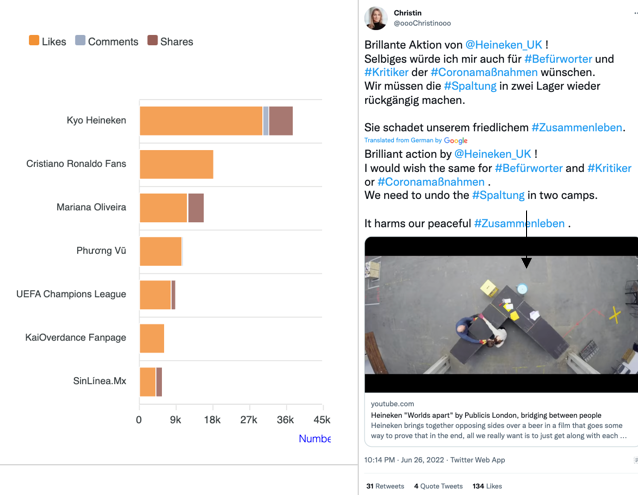
Profiles that discussed Heineken and received the most engagement, and the post that discussed Heineken and received the most exposure.
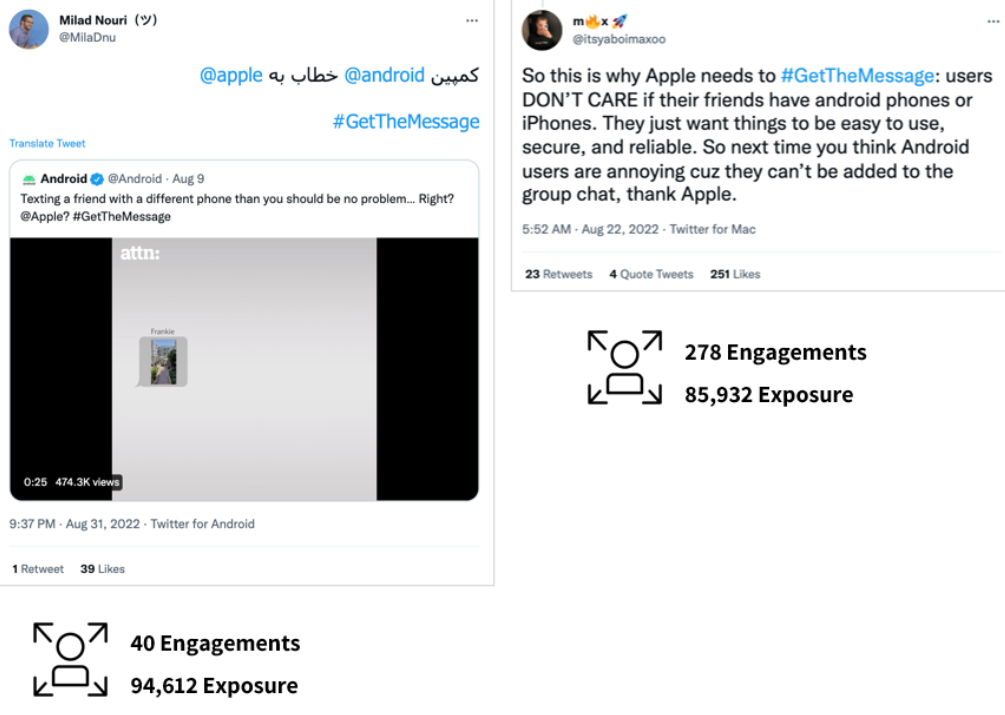
Remember #GetTheMessage, the social campaign that was released by Android in an effort to make Apple change the way it processes messages received from Android users? Scanning the hashtag, Cyabra compared the performance of an account that simply shared the official Android tweet and added a few words and the hashtag, to the profile of a fan who took the time to write about their support of the campaign. As expected, the first post only received 40 engagements, while the second and more detailed one received 278. However, the exposure of the first tweet was actually higher than the exposure of the second one.
Our final example shows the most extreme gap between exposure and engagement: Lego, the huge toy brand, was endorsed by Goodable, a site who’s mission is to share only good news. Goodable’s Twitter has nearly 200,000 followers, and the tweet that mentioned Lego received 1,549 Engagements and was seen by over 3 million people.
However, Cyabra’s analysis uncovered a Twitter account activated by one lego fan with just over 8,000 followers, that received slightly fewer engagements than Goodable – but was exposed to 11 and a half million profiles!

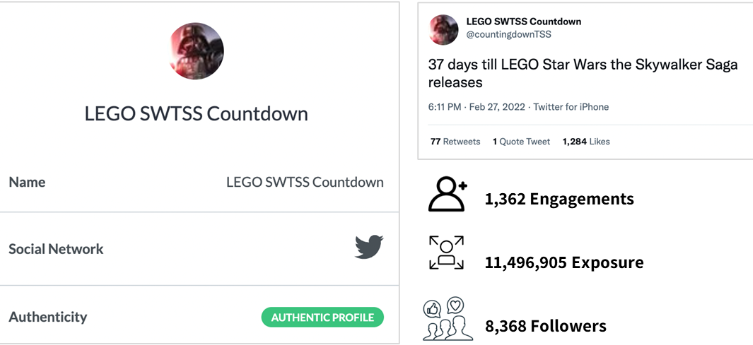
Finding the Posts That Keep Us Posted
So which should we consider a better performing post: the one that all your feed shared, liked and replied to, or the one that was seen by the most people?
The answer to that question is not straightforward, as it depends on the brand, the social network, the target audience, and many other factors.
Nevertheless, Cyabra’s advice is to stop disregarding exposure and understand that both metrics have a huge importance to the success of a brand on social media. Tracking exposure and understanding which posts performed well in this field may bring new interactions, new partnerships, and new influencers you didn’t even know existed.
Contact our experts at Cyabra to learn more!