Case Studies & Testimonials
Discover how Cyabra tackles digital challenges through case studies, showcasing successful strategies against misinformation.
GET A PERSONALIZED DEMOCyabra helps us separate the signal from the noise across the gaming ecosystem. In an environment where narratives can spread quickly, understanding what’s authentic helps us make faster, more informed decisions about when and how to respond.
Cyabra is leading the way in misinformation detection and provides us with meaningful insights that help us keep a pulse on all the different ways that our brands are being talked about.

The capacity for disinformation to spread is a risk that has always been around, but never at the scale, velocity, and magnitude that we are experiencing in the world today. Cyabra has demonstrated that it can identify bots, and detect how quickly disinformation is propagating.

Large audiences provide a large opportunity for nefarious actors to use it as a hook to either push new types of disinformation narratives or to connect long-standing disinformation narratives to exploit this new opportunity. Cyabra has really done a good job at identifying the information and just presenting it to you in a way that […]
Whereas social media listening tools address mentions and sentiment, Cyabra goes deeper, analyzing the profiles involved in the discourse, exposing bots, and uncovering fake campaigns. Cyabra’s technology helps companies detect attacks against their brand, respond in real-time, and defend themselves online.

Disinformation campaigns can quickly damage brands, causing harm to their reputation. Cyabra’s AI-powered platform helps us stay ahead of these threats, giving clients the insights they need to act swiftly and decisively.

Our Work
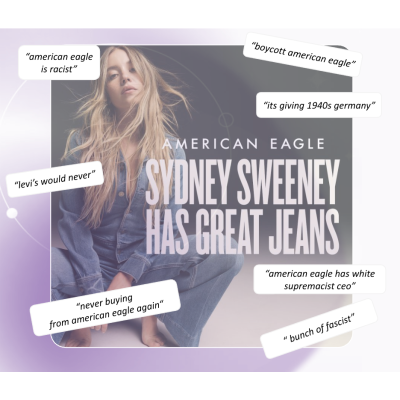
- When American Eagle launched a 2025 campaign featuring Sydney Sweeney with the tagline “Sydney Sweeney Has Great Jeans,” it quickly spiraled into a reputation crisis.
- Inauthentic profiles drove a 4,000% spike in harmful sentiment and generated over 77,000 engagements on TikTok alone.
- Fake profiles positioned themselves in high-visibility comment sections to maximize exposure, creating a disproportionate impact on the overall conversation.
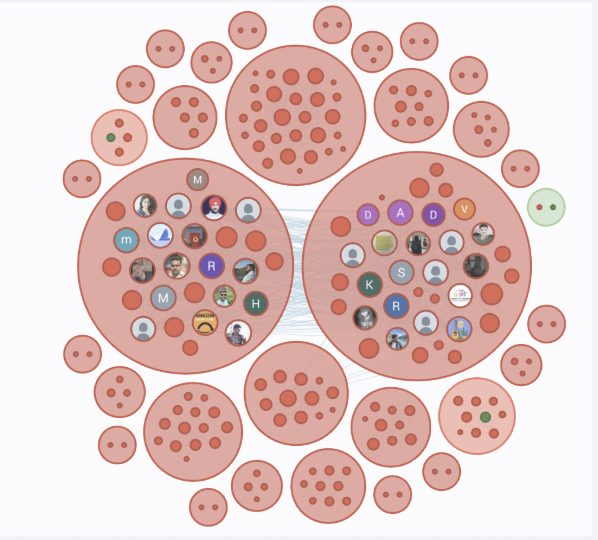
- Cyabra uncovered over 1,000 fake profiles fueling the backlash against Amazon’s DEI rollback, using coordinated hashtags and bot-like behavior to frame the movement as a grassroots protest.
- 35% of the accounts were inauthentic, generating 1,528 posts tied to two boycott waves – driven by campaigns like the “Economic Blackout” and amplified through hashtags like #BoycottAmazon and #AmazonFail.
- Fake content reached over 1.7 million users, triggering a 905% spike in negative sentiment in February and a 26,500% surge in April, prolonging reputational damage well into June 2025
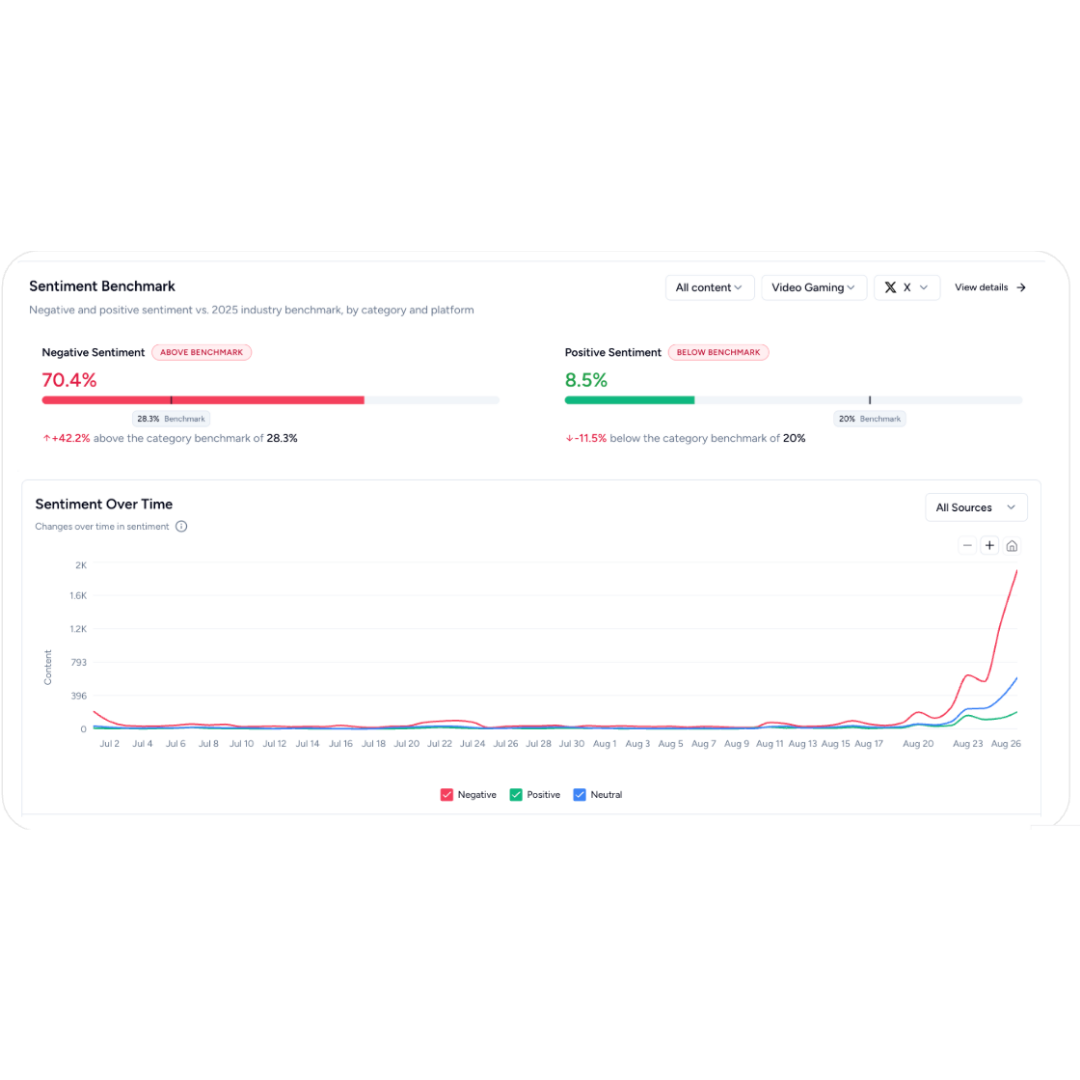
- Cyabra discovered the Sony boycott reached 100.4 million views on X, with 70.4% negative sentiment.
- 842 inauthentic accounts drove 25% of the boycott conversation, generating over 1 million potential views.
- Ownership and control grievances drove 54% of complaints, while up to 43% of comments on official Sony posts were inauthentic.
- Cyabra discovered backlash to Spotify’s 20th-anniversary logo redesign spread across X, Facebook, Instagram, and TikTok, peaking at 500,000 interactions in a day.
- 23% of the profiles driving the backlash were inauthentic, with activity peaking five days after the redesign launched.
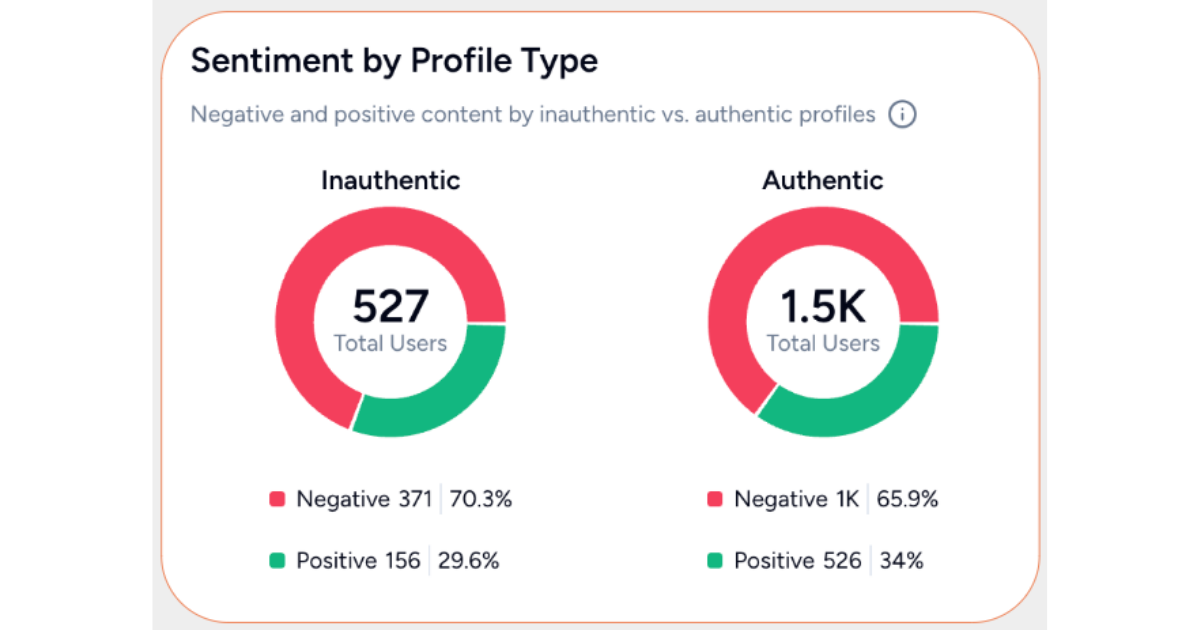
- Inauthentic accounts were far more negative than real users, 70.3% versus 65.9%, generating 13.6 million potential views.
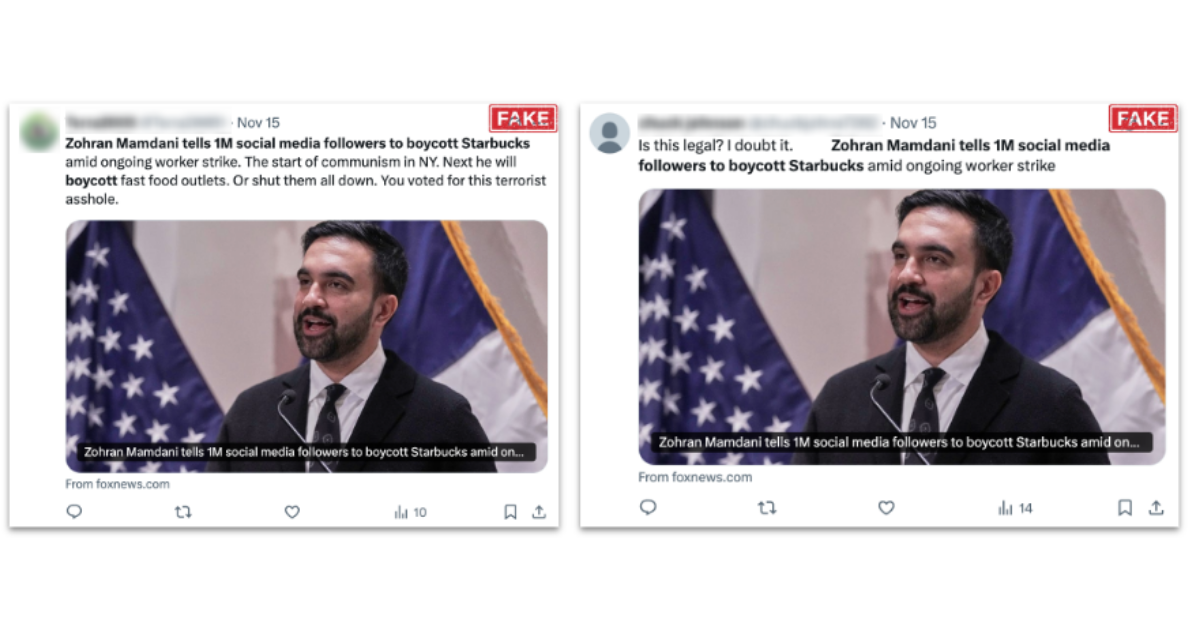
- Cyabra discovered Starbucks content volume spiked over 1,000% on November 12, as the #NoContractNoCoffee strike coincided with Red Cup Day.
- Negative sentiment surged to 51.5% and positive sentiment fell to 18.7% as the crisis deepened through November 14.
- The @SBWorkersUnited account, claiming 12,000+ partners and 96,100 followers, drove the boycott, amplified by Mayor Mamdani and Senator Sanders.
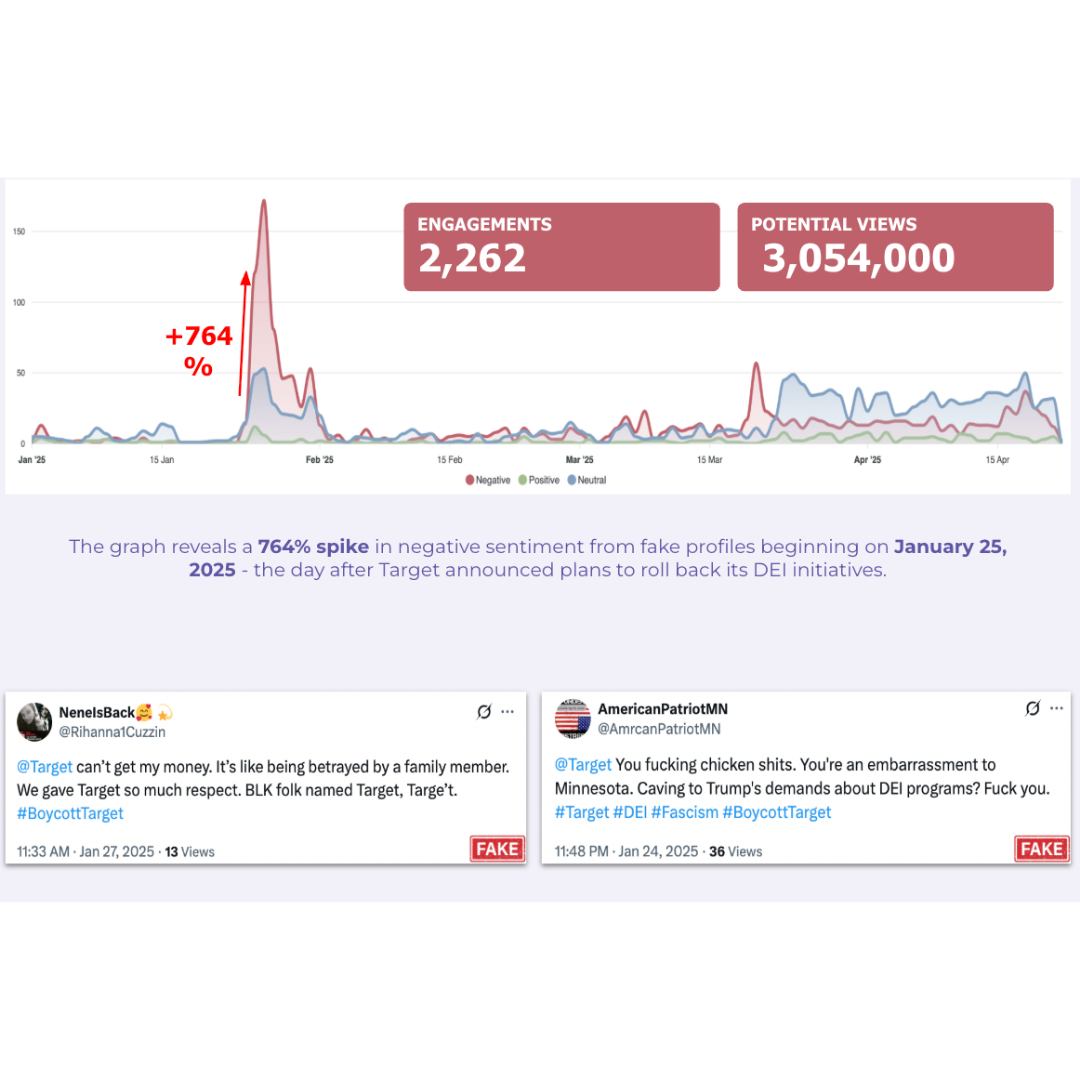
- Cyabra uncovered over 600 fake profiles fueling the online backlash against Target’s DEI rollback, using viral hashtags and boycotts to frame the move as a political betrayal.
- 27% of the accounts were inauthentic, generating over 1,000 posts – many promoting hashtags like #EconomicBlackout and #TargetFast to mobilize protest and economic pressure.
- Fake content reached more than 3 million users, driving a 764% spike in negative sentiment and contributing to Target’s $12B market value drop by late February 2025.
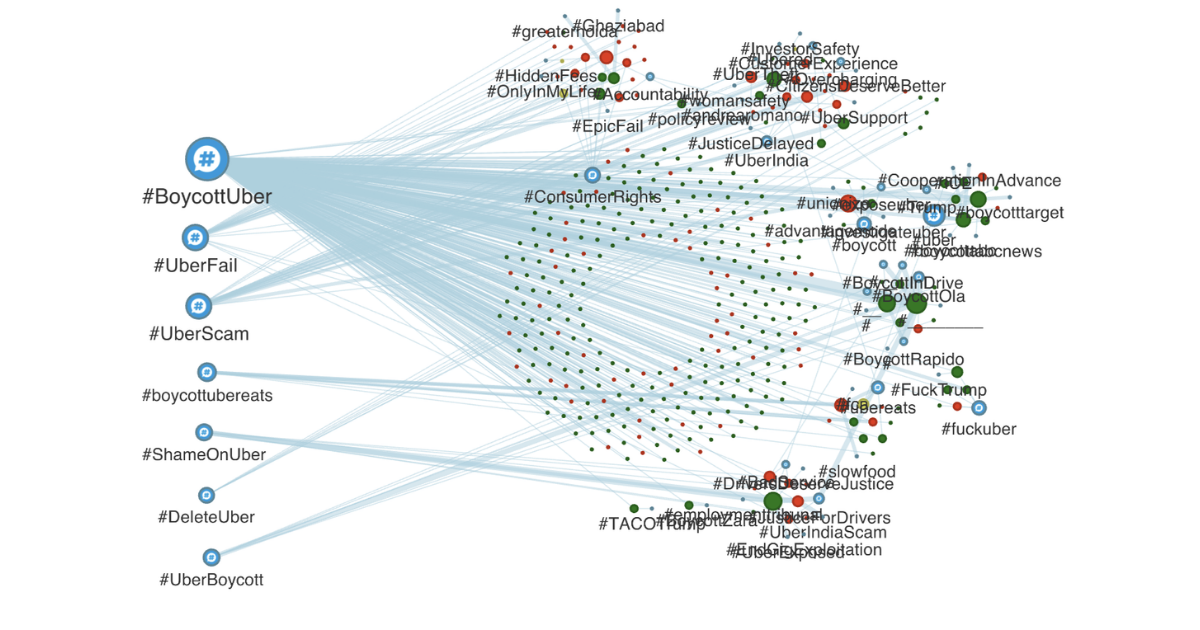
- Following growing online backlash, posts on X called for a boycott of Uber, framing the company as exploitative, unsafe, and politically misaligned. Cyabra found that 29% of the profiles driving this narrative were fake.
- Fake accounts coordinated the spread of four key narratives: labor exploitation, unsafe ride conditions, poor customer support, and Uber’s alleged alignment with controversial political values.
- With a potential reach of 66,000 views, fake accounts successfully blurred the line between real and manipulated content, shaping negative sentiment toward Uber.
- Cyabra analyzed a surge in “DM me for tickets” resale scams on X as demand for World Cup tickets spiked.
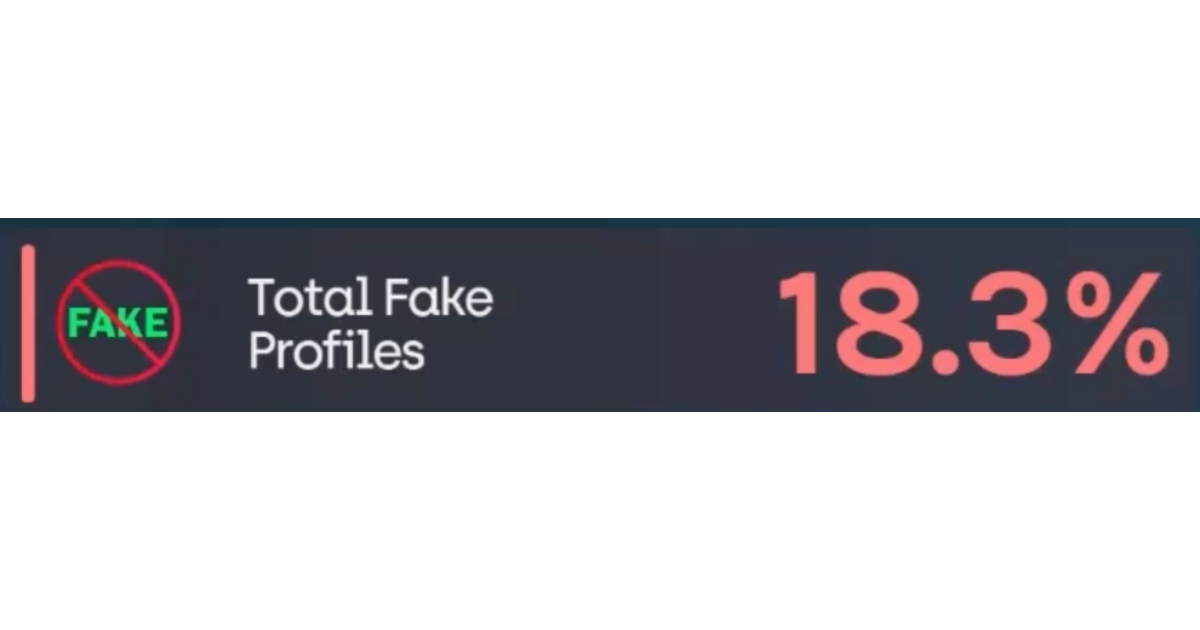
- 18.3% of accounts in the ticket-scam conversation were inauthentic, jumping to 47% in resale-solicitation threads.
- Profiles used templated language like “tickets available, DM me,” pointing to live criminal activity rather than real fan conversation.