Let’s talk about impersonations online, and more importantly, about the connection between impersonations and brand reputation: in the past year, Cyabra has witnessed a steady rise in fake profiles causing huge reputational damage by impersonating companies, brands and individuals on social media. Major brands like McDonald’s, numerous airports around the world, banks, journalists, and many others have been subjected to impersonations. Whether the imposter profiles are engaged in an elaborate phishing scheme, or actively seeking to damage the company’s reputation by impersonating it, the ease and simplicity of creating a false identity has become a growing threat.
Will the Real CEO Please Stand Up?
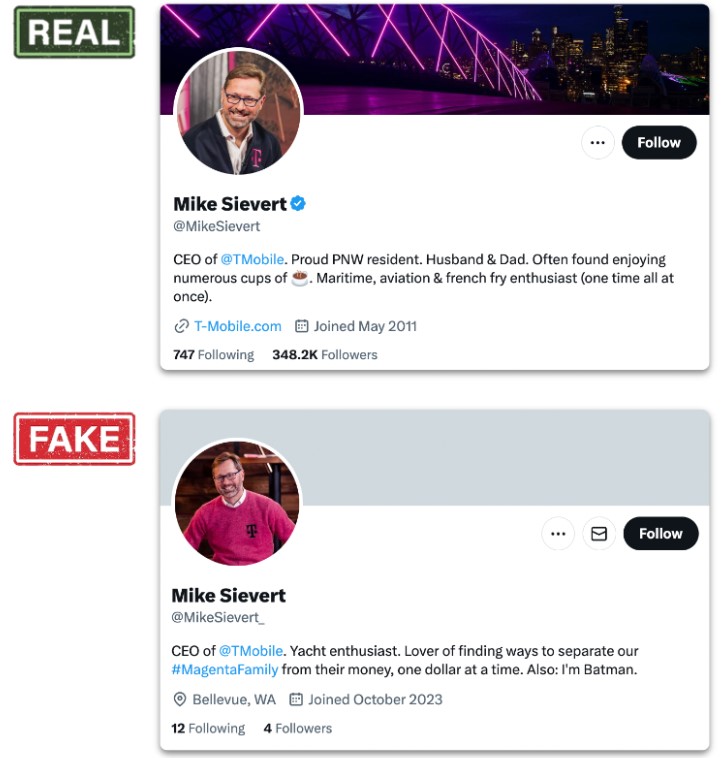
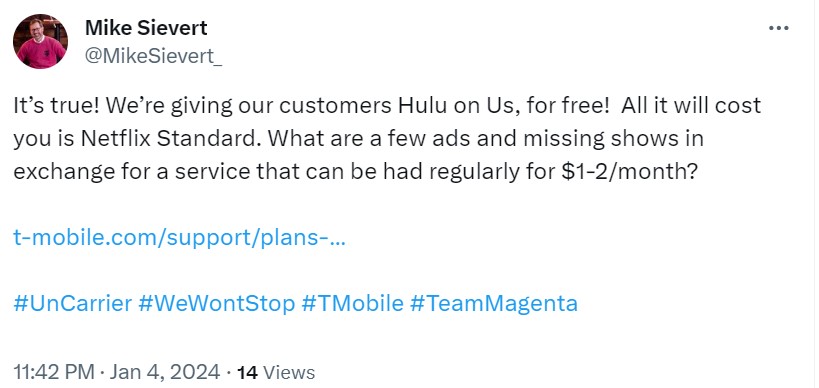
Cyabra has identified a fake X (Twitter) profile impersonating T-Mobile’s CEO, Mike Sievert. The fake profile, which is still active at the time this story is being written, acted under a nearly identical handle, @MikeSievert_ (with the underscore being the sole distinction from the genuine one).
In their bio, the fake profile cleverly mocked the CEO, declaring himself “Lover of finding ways to separate our #MagentaFamily from their money, one dollar at a time”. Other than insinuating that Mike Sievert was exploiting T-Mobile customers, the fake profile showed a deep familiarity with Seivert: it referred both to his personal hobby of yachts, and to a new mobile plan which T-Mobile was heavily criticized for (more on that below). It also chose a profile picture that was fairly different from the one used by the real profile, making it more difficult to detect the impersonation at a glance.
The Right Fake at the Right Time
Here’s some important background to this case: “Magenta Family” was introduced to T-Mobile users last October as an affordable new family plan, but while the company was promoting it, leaked documents posted to Reddit exposed that the plan would force customers subscribed to older plans to automatically move onto newer, expensive ones, with opting out being challenging and unintuitive. T-Mobile and Sievert were heavily criticized, until, at the end of October, T-Mobile conceded and rolled back the forced migration, allowing customers to keep their current programs.
The fake profile was created and started posting at the same month the plan was announced. The imposter used the hashtag #MagentaFamily while it criticized and mocked T-Mobile and Sievert, implying they wanted to keep the forced migration quiet, and that their network had data breaches.
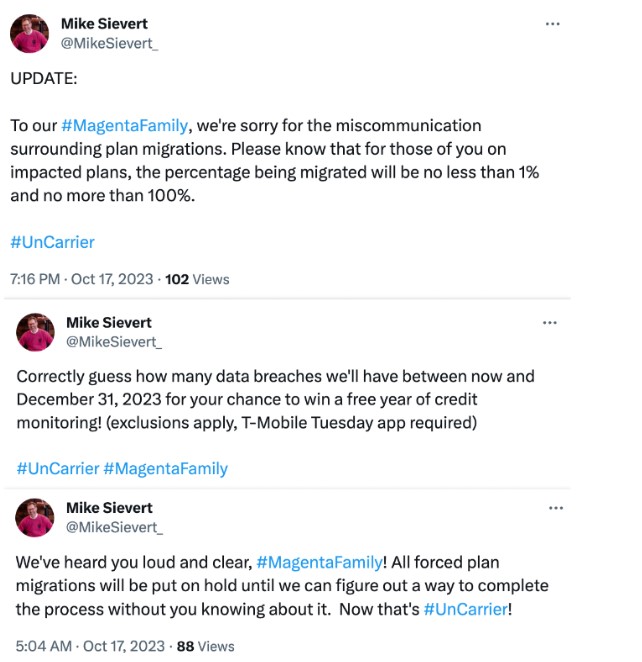
This impersonation case might look like somebody was just making fun at Sievert’s expense – possibly, a client unhappy with the forced migration plan. However, the level of introduction with Sievert, including his hobbies, the paraphrased bio, the profile picture, and to top it all off, the smart and well-timed use of the PR crisis around the new Magenta Family plan, showed a malicious intent of damaging the company’s reputation. The bad actor behind this fake profile has clearly done their research and gathered information that would effectively target both Sievert and T-Mobile.
Furthermore, the imposter didn’t stop discrediting T-Mobile when the forced migration was revoked: the profile remained active and found new topics and new reasons to criticize Sievert and T-Mobile, while of course still pretending to be the CEO.
Imposters Are Always Out to Harm Us
While impersonations of companies may be easier to detect and uncover, imposters pretending to be real people are harder to identify and stop, especially when the fake profiles are operated by a real person, with the ability to adjust details like bio and profile picture, and to write posts that sound legitimate and credible with the sole purpose of causing harm to the CEO’s or company’s reputation. Keep in mind that fake profiles can be created months before they start operating. While they lay dormant in wait, they are especially difficult to identify.
With the right technology, it is possible to detect a fake profile before it starts inflicting damage to your reputation or to your company’s reputation. To learn more about detecting brand reputation threats and impersonations, and to stop online PR crises at their initial stages, contact Cyabra.