Unmasking the Shadows

Cyabra analyzed state-sponsored fake campaign and bot network to understand their impact on public perception.

Over the past two years, Cyabra has conducted a thorough investigation into the activation methods and strategies of fake campaigns originating from three key regions: the Gulf countries, China, and Russia.

Cyabra uncovered fake campaigns that focused on Iran, Moscow, Hamas, and others, with an overall potential reach of 569.9 million views. 

This research aims to analyze the different techniques of state-backed fake campaigns and uncover the agenda behind foreign influence operations, to better understand the global security risk they create. 

#National Security, Threat Actors

Share this report
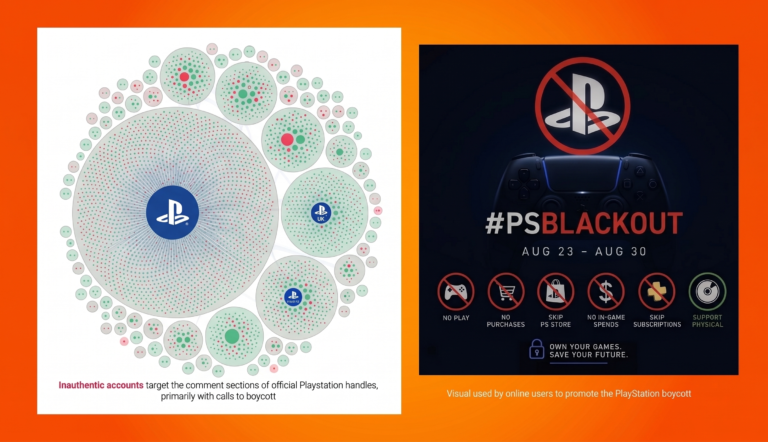
Network visualization of clustered social media accounts, large green circles illustrating conversation volume and red dots marking suspected disinformation sources
Share this report

Fill up the form below and receive the full report directly to your inbox

Related reports

The Vladimir Putin Interview

February 28, 2024

Cyabra examined the connections and similarities among the fake accounts to identify any coordinated activity.

Four faked social media posts with inflammatory remarks about Navalny, Zelensky and U.S. politics, each marked with a red FAKE stamp

#National Security

Exposing the Network Behind Anti-Uber Attacks

June 18, 2025

Amid growing backlash, Cyabra uncovered a coordinated fake campaign designed to discredit Uber and fuel the boycott across social media.

Collage of tweets criticizing Uber and calling for a boycott, each overlaid with a red FAKE stamp

#Brand Reputation, Threat Actors

Mondelēz

November 18, 2022

An analysis of snack foods company Mondelēz, including sentiment and comparative analysis.

Table comparing consumer sentiment for Mondelez, Nestle, Coca-Cola, and Mars Wrigley across product, price, service, and marketing, using green, orange, and red owl icons to signify positive, neutral, and negative reactions

#Brand Reputation