

Cyabra’s recent investigation into the online discourse surrounding the game Team Fortress 2 has unveiled a significant presence of fake profiles actively participating in these online discussions. Posts spread by inauthentic accounts distorted the genuine concerns of real players, highlighting the need for monitoring and response strategies. Ironically, the movement, which used hashtags #SaveTF2 and #FixTF2 formed because gamers expressed their discontent with the vast amount of bots taking control over the game, pretending to be real players.
TL;DR?
- 16% of profiles discussing #SaveTF2 and #FixTF2 on X were fake
- Fake profiles’ posts gained 4,730 engagements and reached a potential 5.1 million views
- Coordinated activity among fake profiles included the use of fake names, profile pictures, and recent account creation..
Why Does Team Fortress 2 Need Saving?
Players of Team Fortress 2 (TF2) have rallied together behind the #SaveTF2 campaign to address the proliferation of in-game bots. Bots have long plagued the game, causing various issues including cheating, spamming hate speech, and disrupting gameplay for real players. The #SaveTF2 campaign urges gaming company Valve to take more decisive action against these nuisances.
Who’s Behind the Hashtag?
Between May 27 and June 4, Cyabra’s advanced AI algorithms scanned the hashtags #SaveTF2 and #FixTF2, revealing that 16% of the discourse on X was generated by fake accounts. These fake accounts managed to reach a potential 5.1 million views and 4,730 engagements, highlighting the significant scale of the problem.
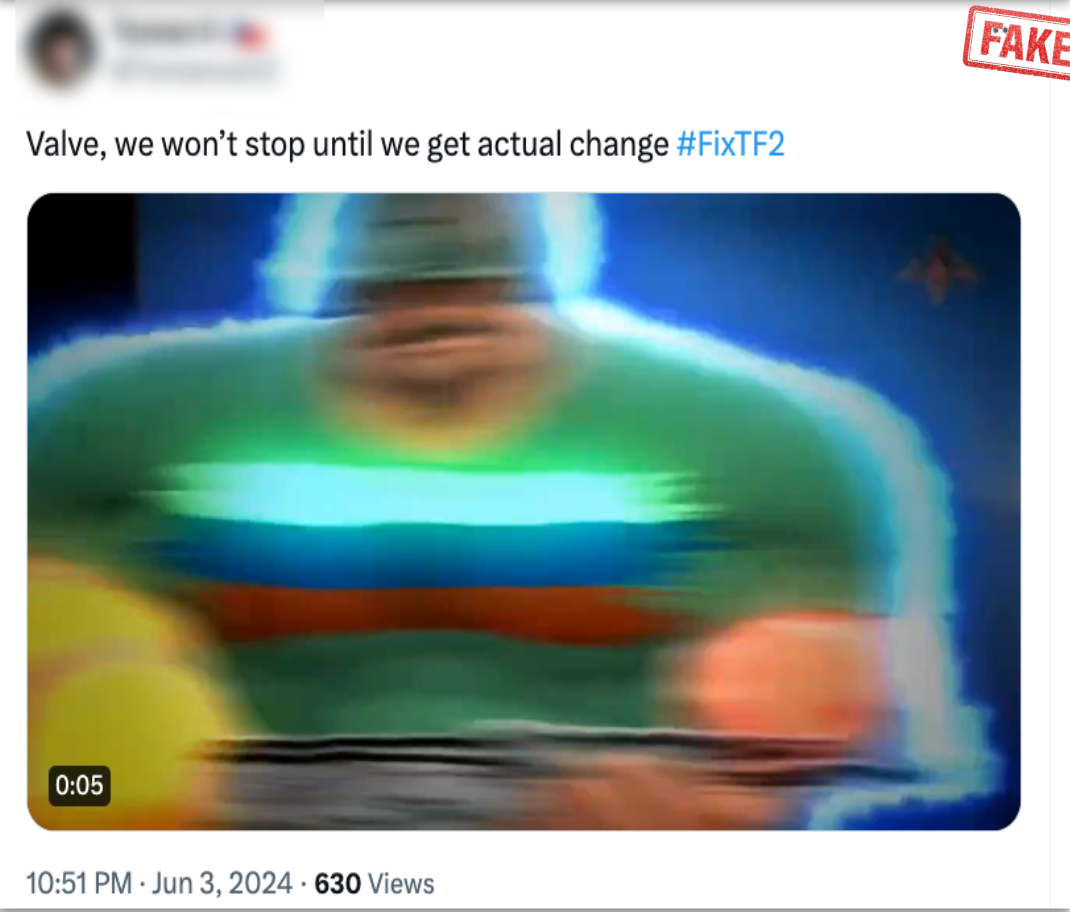
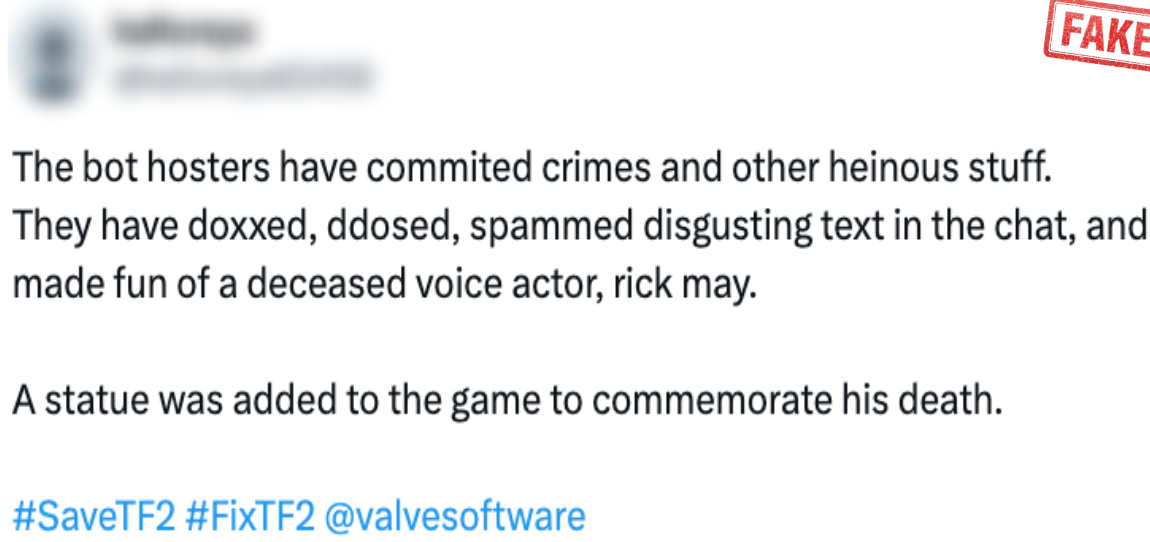
Posts created by fake profiles on X.
Cyabra’s analysis identified coordinated behavior among these fake profiles. These accounts typically:
- Used fake names
- Had fake profile pictures
- Were created recently
- Had few followers
- Leveraged viral hashtags to expand their reach
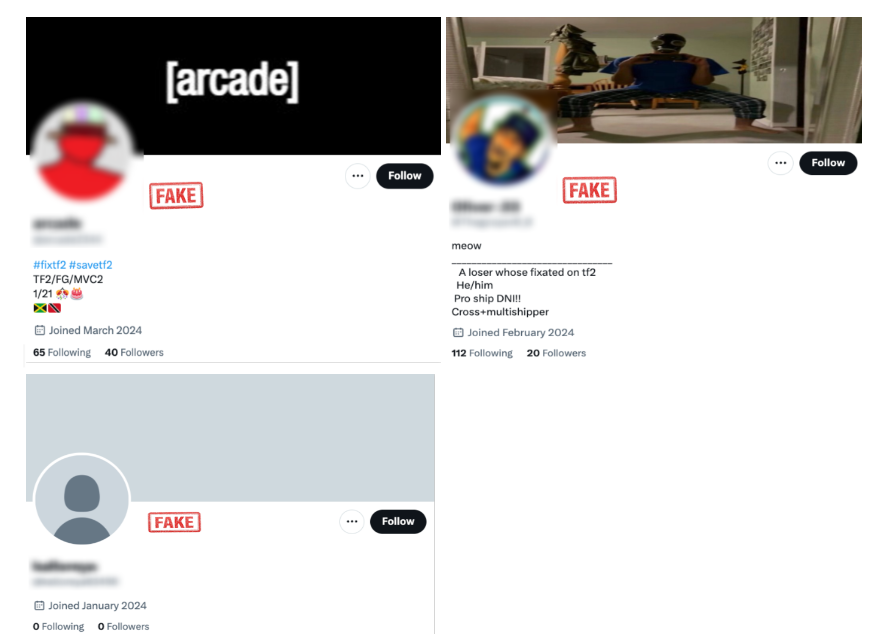
Some of the fake accounts that used #SaveTF2 and #FixTF2
Ironically, the fake profiles primarily called for the game’s owners to fix the game and remove bot players, echoing the sentiments of real players. The involvement of these inauthentic accounts can muddy the waters, making it challenging to discern genuine concerns from manipulated narratives. The coordinated activity among these fake profiles underscores the threat posed by fake profiles to brands – especially brand whose business heavily involves the online realm.
Fighting Bots In-Game and On Social
The prevalence of inauthentic accounts in the #SaveTF2 and #FixTF2 discussions highlights a critical need for robust early detection strategies. For stakeholders managing the online reputation of games like TF2, effective strategies for safeguarding public discourse include:
- Using advanced AI to detect inauthentic accounts
- Continuously monitoring for fake accounts pushing negative hashtags and for other suspicious activities
- ing and fighting the impact of fake profiles in real-time, and defending brand reputation.
For advanced solutions to identify and combat the risks posed by fake profiles in real-time, contact Cyabra.