


A chaotic election season in the Philippines ended on May 12, with over 68 million voters casting their ballots.
This midterm election marked a surge in the popularity of the Duterte family – former President Rodrigo Duterte and his daughter, Vice President Sara Duterte-Carpio. Both are facing criminal charges, which didn’t stop voters from supporting them and their allies.
Cyabra’s latest investigation reveals that fake profiles and coordinated campaigns played a massive part in boosting support for the Duterte family, and particularly Rodrigo Duterte.
TL;DR?
- 32% of accounts participating in conversations about Duterte’s arrest were inauthentic.
- The coordinated campaigns praised Duterte’s leadership and framed his arrest as foreign interference, amplifying hashtags like #BringPRRDHome.
- Fake profiles’ content gained over 7,000 engagements and a potential reach of 11.8 million views
- Pro-Duterte content dominated the conversation, with emotional appeals, patriotic language, and identical messaging pointing to a tightly orchestrated effort.
A New Chapter in Election Manipulation
80-year-old former President Rodrigo Duterte, who was arrested on March 11, 2025 due to alleged human rights abuses during his controversial “war on drugs”, was re-elected mayor of Davao City in the elections, despite being currently detained. His daughter, Vice President Sara Duterte-Carpio, who was impeached in February on charges including corruption and threats on the life of President Marcos, is still facing charges – but her Senate allies won re-election, a result that could have a positive impact for her in the upcoming trial.
Cyabra analyzed online conversations regarding the elections and Rodrigo Duterte’s arrest between March and April, and found that 32% of the profiles discussing Duterte were fake, and were recasting him as a national hero under attack. The messaging was consistent: Duterte was a “father of the nation,” a “once-in-a-lifetime president,” and the victim of international injustice.
Fake profiles pushed those narratives with emotionally charged hashtags like #BringPRRDHome, #WeStandWithDuterte, and #FreeDuterte, often without additional content – a tactic used to flood feeds and artificially inflate engagement. Another common tactic for fake profiles witnessed was a peak of coordinated activity at specific times (notably, Tuesdays and Thursdays between 2:00–3:00 PM UTC).
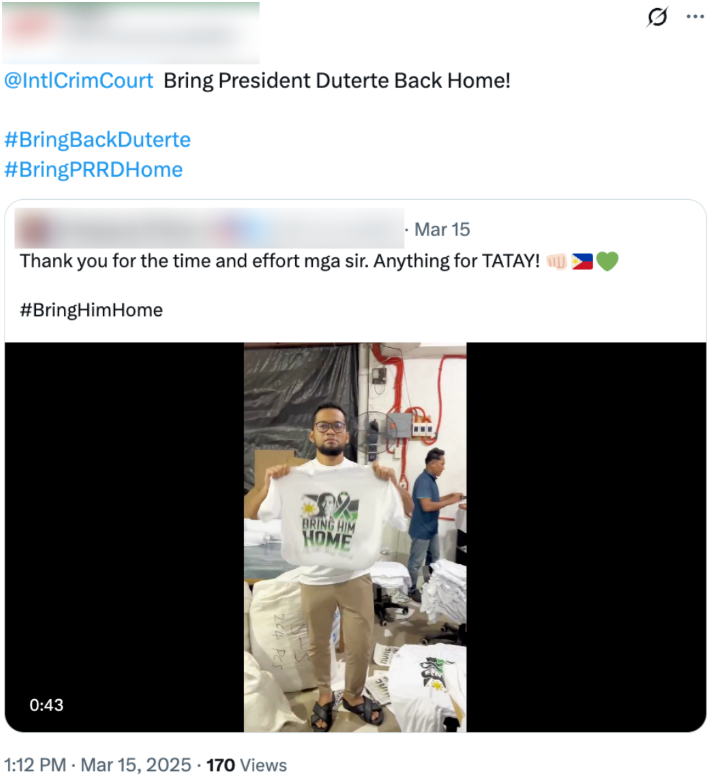
In the picture: A fake profile uses emotionally charged hashtags #BringBackDuterte and #BringPRRDHome.
Identical Posts, Shared Hashtags, Synchronized Behavior
Cyabra uncovered clear indicators of coordination among the fake profiles:
- Dozens of posts with identical or near-identical text
- Simultaneous posting patterns across multiple accounts
- Mass promotion of the same hashtags
- Synchronized emotional triggers, such as dozens of fake birthday wishes posted on the same day
The repetition of messaging, such as calling Duterte “irreplaceable” and “wrongfully imprisoned”, was designed to give the impression of widespread organic support, when in reality, the online discourse was carefully manipulated.
Nationalism and Emotional Appeal
The fake campaign gained its goal: Cyabra’s sentiment analysis uncovered that over 30% of the online conversation was supportive of Duterte, framing him as a patriotic figure wronged by foreign powers. Posts frequently referred to him affectionately as “Tatay Digong” (Daddy Digong), using national symbols like flag emojis and language evoking pride and unity.
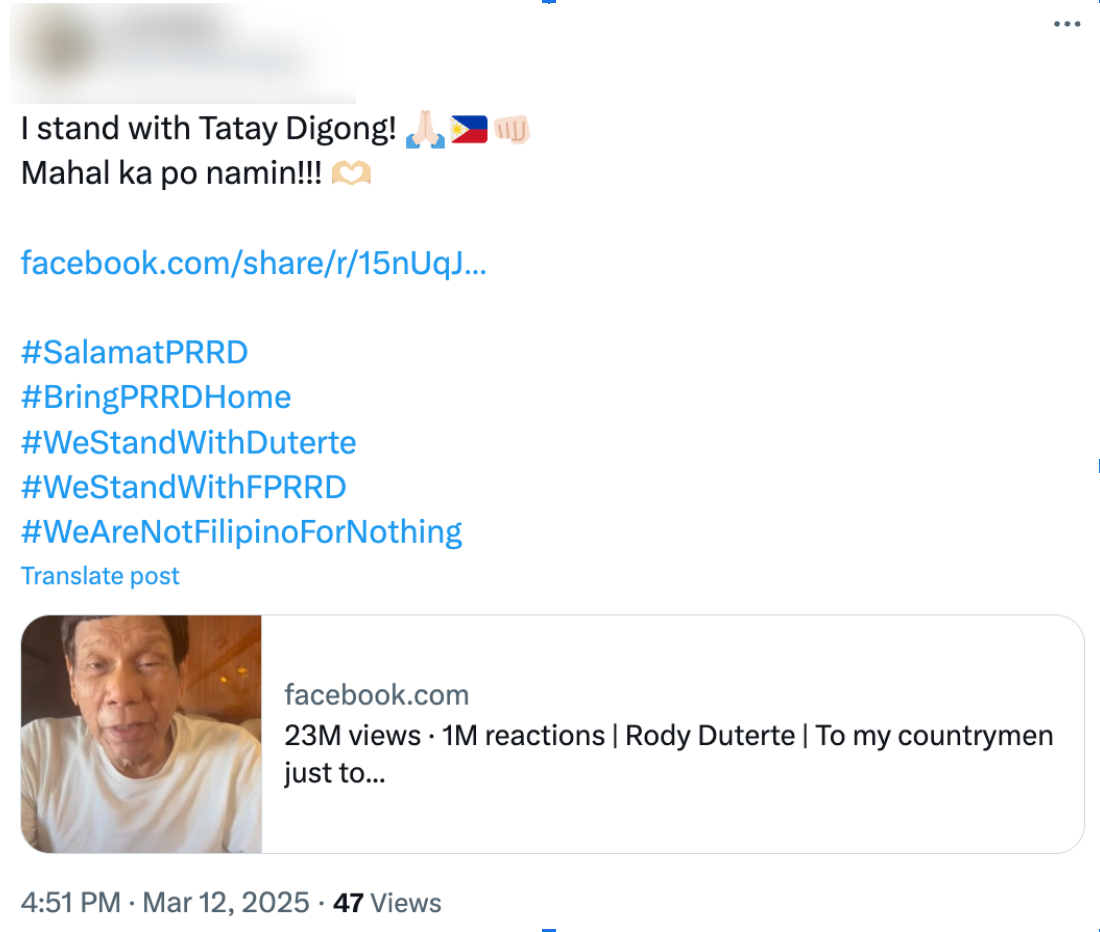
In the picture: Bots call Duterte “tatay Digong,” an affectionate term framing him as a beloved paternal figure.
Another major theme in the conversation was anti-ICC (International Criminal Court) sentiment: 21.8% of posts expressed frustration with the ICC, accusing it of overstepping its bounds and violating Philippine sovereignty.
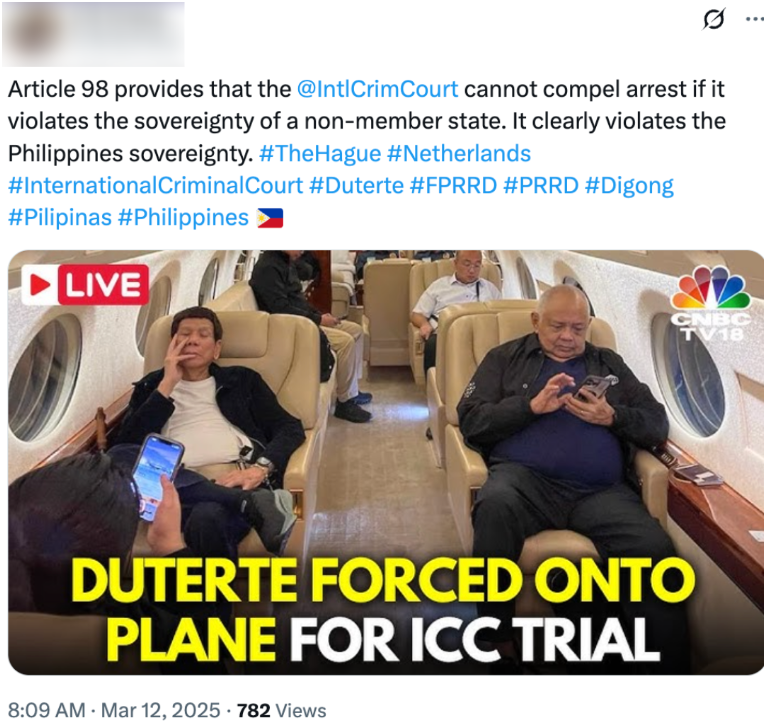
In the picture: Fake profiles criticized the ICC, accusing it of violating Philippine sovereignty.
Together, these narratives positioned Duterte as both a beloved national leader and a political prisoner, someone to be defended against foreign manipulation.
Fake Campaign, Real Reach
Cyabra’s analysis revealed that fake profiles generated over 7,000 engagements and reached a potential 11.8 million views. That kind of visibility has real influence, especially in a politically polarized landscape where online perception often shapes public opinion.
The campaign’s reach and emotional resonance suggest its goal wasn’t just to support Duterte’s image ahead of the Philippines’ elections – it also aimed at delegitimizing international oversight and reframing the narrative as one of national resistance. It was successful: the online conversation has been skewed, hijacked by fake voices and emotional appeals that drown out legitimate conversations. The rippling impact of this manufactured massive online support had a real impact on the Philippine elections.
Cyabra’s findings point to a broader trend in global politics: The battle over public perception is no longer fought in press conferences or courtrooms; it’s happening on timelines, hashtags, and viral threads.
As AI-enhanced influence campaigns become more common, safeguarding electoral integrity requires vigilance, adaptability, and advanced detection capabilities. To protect democratic processes, governments must act decisively to detect fake profiles early before they manipulate conversations, monitor political narratives in real time to uncover coordinated influence efforts, and equip citizens to identify and resist inauthentic amplification tactics.
Learn more about Cyabra’s tools for monitoring election discourse, uncovering fake campaigns, and identifying bot networks in real time.