


At the end of February, a viral tweet and image of an email from Google claiming that “Gmail will officially be sunsetted” started trending on X (Twitter), leading to a flurry of headlines and an overall online panic. Google quickly set the record straight and declared this email to be fake, clarifying that Gmail was here to stay. Unfortunately, the damage had already been done. Cyabra has uncovered that this hoax was amplified by fake profiles, that caused it to trend and reach the potential eyes of over 24 million people.
The hoax’s virality traces back to a tweet posted by @growing_daniel, an influencer with over 100,000 followers. On February 22nd, @growing_daniel tweeted a screenshot of the fake email along with the caption, “This is insane. I hate this company.” The tweet continued trending and was not deleted despite Google refuting the hoax.
@growing_daniel’s tweet reached over 24 million potential views within just a few days, and over 13,000 engagements. 27% of the interactions with the viral tweet came from fake profiles. Check out the graph below, showing how fake profiles latched onto this topic and amplified it.
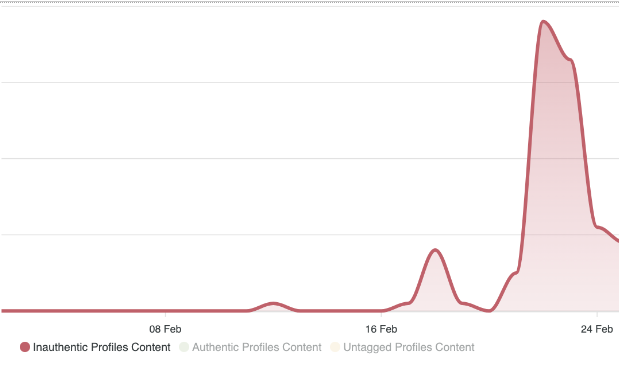
Cyabra found that the day @growing_daniel posted their viral tweet, bot activity skyrocketed by 660% on X (Twitter), Facebook, and TikTok.
Many of these profiles shared sensationalized content to gain likes, shares, and followers. This further perpetuated the narrative that Gmail was being discontinued.
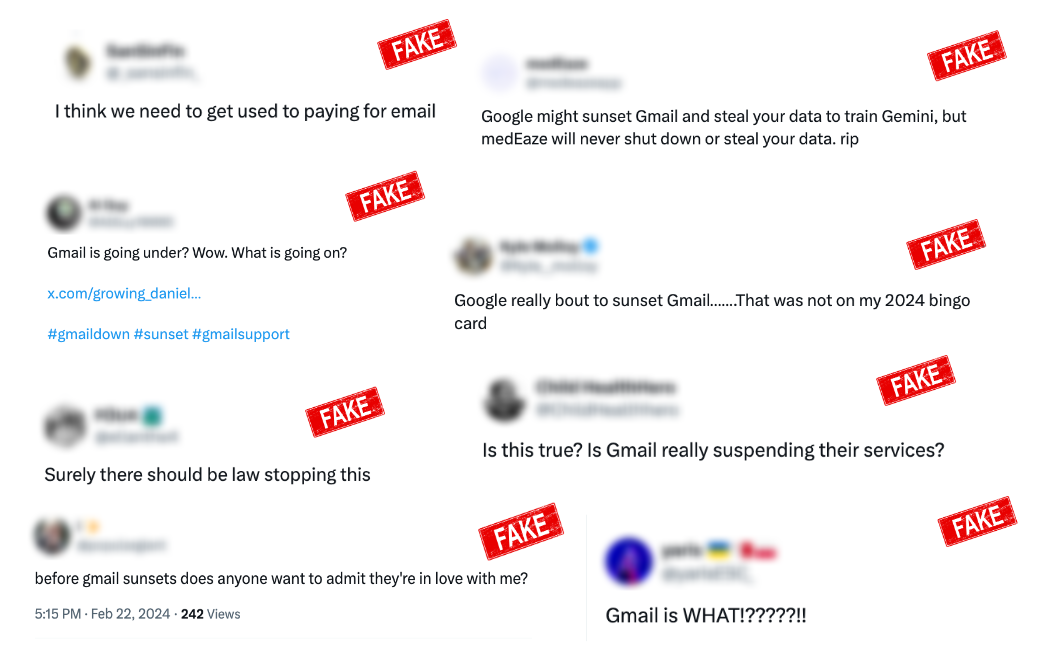
Disinformation on the Horizon
This incident highlights the impact of disinformation spread and amplified by fake profiles, which have the ability to garner significant reach and impact the discourse around trending topics like the Gmail sunset hoax. This is not an isolated incident but a part of a broader pattern of fake profiles using fake news, disinformation, and even “simple” negativity to amplify their agendas and sow confusion and mistrust online.
The persistence of deceptive practices reminds us that it’s imperative to remain vigilant against the manipulation tactics employed by fake profiles, and to proactively monitor not just the discourse, but also the impact and spread of fake profiles, coordinated campaigns, and bot networks.
To learn more about Cyabra’s tools for detecting bots and fake profiles in trending online discourse, contact us.