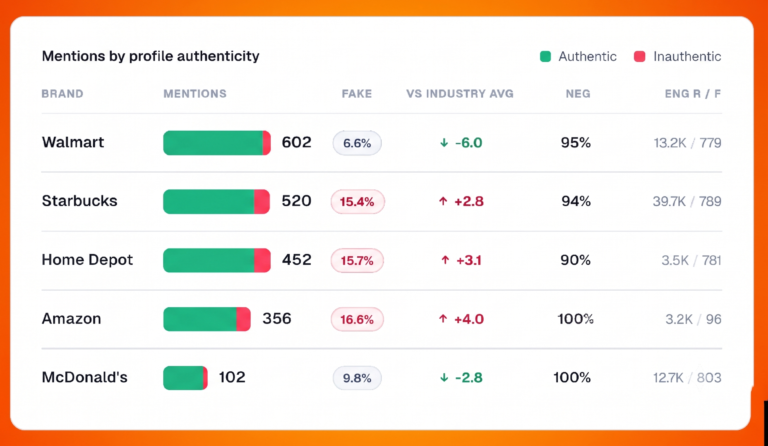
After monitoring an entire year of financial discourse, Cyabra’s analysis found that fake accounts made up 17% of stock market conversations in 2025, up from 13% the year before. That 4 percentage point rise came with a 50.8% surge in engagement and a 52.6% increase in potential reach.
The escalation showed up across stocks: Fake profiles promoting Berkshire Hathaway nearly doubled year over year, growing to 1,188 accounts, while a single coordinated account generated over 17,400 posts targeting Tesla.
Depending on the target, fake profiles pushed opposite narratives, from claims of declining sales and outdated technology to FOMO-driven promotion built on false claims of investment expertise.
Coordination indicators included synchronized posting within minutes, identical messaging shared across profiles, and account creation clustered within narrow timeframes, pointing to organized networks rather than independent activity.