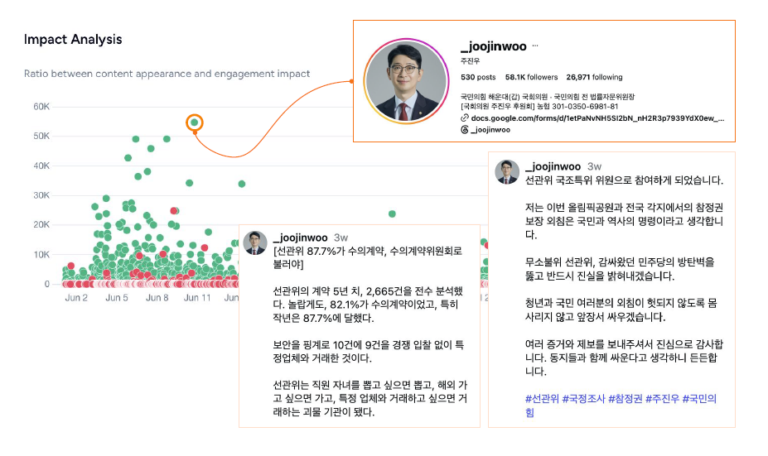
The backlash originated with Snoop Dogg’s appearance on The Giving Podcast and escalated rapidly, peaking with hundreds of negative posts recorded in a single day.
The negative discourse centered on three recurring narratives tied to Snoop Dogg’s remarks about Disney’s Lightyear and LGBTQ representation, each reinforcing a distinct framing of his public image. The report maps how these narratives spread and intensified across platforms.
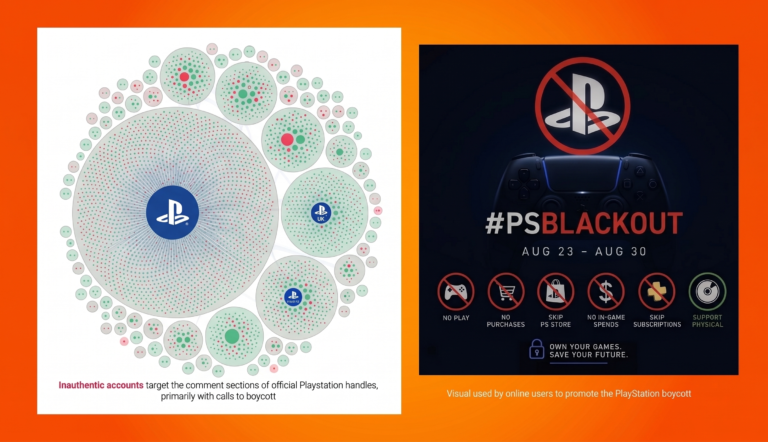
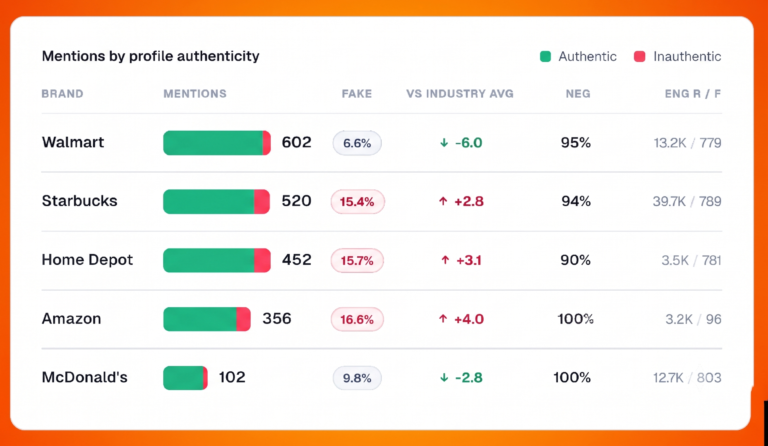
21% of the profiles in the discourse were inauthentic, a rate significantly above baseline. Hundreds of inauthentic accounts were actively participating alongside real users rather than operating in isolation.
Coordination indicators include synchronized engagement patterns, repeated content across accounts, and strategic hashtag use spanning #snoopdogg, #Lightyear, #Disney, and #lgbtq, generating over 12,000 engagements and nearly one million potential views.