


The World Cup wrapped up this past Sunday, but the digital conversation around it left plenty to unpack. Cyabra and Onclusive tracked 52 million mentions across the tournament to see where the conversation was real, and where it wasn't.
- 90% of World Cup conversation happened on social, where coordinated inauthentic activity is hardest to spot.
- A food-distrust narrative around Norway's team started with real fans before inauthentic accounts piled on with hostile language.
- Ticket resale scams showed clear coordinated behavior, nearly half the accounts in "DM me for tickets" threads were inauthentic.
- The "scripted result" narrative after Algeria's draw with Austria was mostly driven by real fans, not inauthentic activity.
The World Cup 2026 final wrapped up this past Sunday, with Spain beating Argentina 1-0 in extra time for their second title. But the digital conversation around the tournament tells its own story, one that runs well beyond the scoreline. Over 52 million mentions and an estimated reach of 52 billion people, that’s what the first 48 team tournament, co-hosted by the United States, Canada, and Mexico, generated online. But when a trend takes off on X or Instagram, how do you know if real fans are driving it, or if a network of inauthentic accounts is pulling the strings? With AI making it inexpensive to simulate thousands of voices, the line between a genuine fan reaction and a coordinated narrative attack has become harder to see.
Jimmy Laski from Onclusive and David Low, Cyabra’s CMO, recently walked through this data to show what authenticity looks like at a global event of this scale. They found that while most of the volume lives on social media, traditional news still carries the reach. More importantly, they found that bad actors rarely invent a story from nothing. They find a small spark of real sentiment and add fuel to shift the whole narrative.
How We Track Global ConversationsHow We Track Global Conversations
To build this analysis, Onclusive and Cyabra tracked data from May 11 to July 3, 2026. Onclusive’s tools monitor more than 28 million pieces of content a day across press, broadcast, and digital sources. This wasn’t limited to English. The analysis spanned nine languages, because a post about Mbappé in Paris carries a different charge than one in Tokyo.
The process runs in two stages. First, Onclusive’s social listening surfaces what people are saying and flags rising trends, like a specific moment or storyline gaining traction, before it reaches the mainstream. That gives the broad view of the conversation.
Then Cyabra applies narrative intelligence on top of it, looking under the surface to check whether the conversation is authentic. It looks for coordinated behavior and inauthentic accounts. Gartner has recognized narrative intelligence as its own emerging market category, as companies can no longer afford to guess whether a viral moment is organic or engineered.
Where the World Cup Conversation LivesWhere the World Cup Conversation Lives
The data shows a split between where people talk and where the reach actually lands. About 90% of the conversation happens on social media, with X capturing the largest share at 62%, well over half of all social mentions.
Traditional media still carries the mass reach, though. A story might start on X, but it doesn’t reach global scale until a major outlet picks it up. Of the roughly 52 billion combined reach Onclusive and Cyabra tracked, nearly 50 billion came through traditional media alone.
The topics shifted quickly once play began. Before kickoff, the conversation leaned anxious. Then a spike hit on May 14, when Madonna, Shakira, and BTS were announced as co-headliners for the World Cup final halftime show. Once matches started, the conversation moved almost entirely to players and teams. Lionel Messi was the most mentioned individual, followed closely by Cristiano Ronaldo, with Kylian Mbappé and Neymar tied for third.
Detecting Manipulation and MisinformationDetecting Manipulation and Misinformation
One of the clearest examples of coordinated activity involved Norway’s national team. A story circulated claiming the team brought its own food to the tournament because it didn’t trust American food standards. It started as ordinary commentary from a handful of real fans. Then inauthentic accounts got involved.
Cyabra found that inauthentic accounts made up 17.7% of the profiles driving the story, well above typical benchmarks for coordinated activity on X. These accounts didn’t invent the story. They amplified it and layered in hostile language around words like “poison”, “chemicals”, “toxic”, “GMO” and “additives” turning a sports quirk into anti-American messaging.
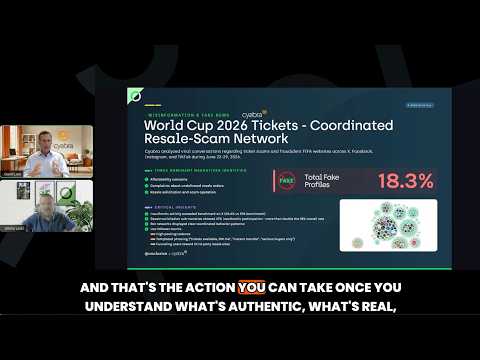
A similar pattern showed up around ticket sales. General conversation about ticket prices was mostly organic, but the specific “DM me for tickets” threads were different. Cyabra found 18.3% of accounts in the broader ticket-scam conversation were inauthentic, and within the resale-solicitation threads specifically, that figure jumped to 47%, more than double the overall rate. These accounts shared common traits: low follower counts, high posting frequency, and templated language like “tickets available, DM me” and “instant transfer.”
Turning Data Into Strategic ActionTurning Data Into Strategic Action
When a brand or government sees a spike in negative conversation, the first question should be: is this real? The ratio of inauthentic to authentic accounts tells you how to respond. A narrative driven mostly by real people is a genuine reputational issue that needs a real response. A narrative driven mostly by inauthentic accounts can gain a bigger audience if a brand responds to it directly, since the reply itself can amplify the story.
Across the three narratives Cyabra flagged this tournament, the food-distrust story around Norway, the ticket resale scams, and the “scripted result” conspiracy after Algeria’s 96th-minute, 3-3 draw with Austria, inauthentic accounts made up between roughly 18% and 23% of the conversation. In every case, the majority of the engagement came from real people, even where a coordinated layer clearly shaped the tone. That’s a useful reminder: not every conspiracy or pile-on is coordinated at scale, and treating a mostly-authentic conversation as fake can lead a brand to stay silent when a direct response would serve it better.
For active scams, like the ticket resale networks, a statement isn’t enough. The templated language and coordinated posting patterns point to live criminal activity, not just a viral rumor. The right response there is fan warnings paired with platform takedown requests.
Using Host City and Sponsorship InsightsUsing Host City and Sponsorship Insights
The US is hosting, but American fans aren’t the loudest voices in the global conversation. Host cities are still a major opportunity. Los Angeles leads local conversation share, followed by Mexico City, New York/New Jersey, Miami, and Dallas.
Brands that aren’t official sponsors can still win through “ambush marketing.” By focusing on the city or the stadium instead of the tournament itself, they can capture attention without paying for official rights. It’s the same logic behind brands referring to “the big game” instead of the Super Bowl to stay outside trademark restrictions.
Player endorsements are also driving a meaningful share of the conversation. Ronaldo’s association with Nike captured 13% share of voice, while Yamal’s with McDonald’s captured 10%. These pairings let brands ride the wave of organic fan excitement around a specific player, even without an official tournament sponsorship.
Final Thoughts on Narrative IntelligenceFinal Thoughts on Narrative Intelligence
The storylines this data flagged heading into the knockout rounds largely played out. The Golden Boot race, a three-way tie between Mbappé, Haaland, and Messi entering the quarterfinals, ended with Mbappé taking the award, and the scrutiny around officiating and VAR decisions carried all the way through to the final. High-drama moments like these are usually where conspiracy narratives take root.
The collaboration between Onclusive and Cyabra shows that social listening is only half the picture. Knowing what’s being said is far less useful without knowing who’s saying it. Combining broad monitoring with narrative intelligence lets organizations stop guessing and start responding with evidence.
Whether you’re a brand manager or a government communicator, the goal is the same: separate the signal from the noise. Using data to establish what’s authentic, rather than assuming the worst, is what makes a strategic response actually work.
Watch the full webinar on Cyabra’s YouTube, or download the full Onclusive and Cyabra joint report
About 90% of the conversation happened on social media, with X alone capturing 62% of social mentions. But traditional media carried the mass reach: of the roughly 52 billion combined reach tracked, nearly 50 billion came through traditional outlets rather than social posts.
It started as ordinary commentary from a handful of real fans claiming Norway’s team brought its own food over food-standard concerns. Inauthentic accounts, 17.7% of the profiles driving the story, then piled on, layering in hostile language around words like “poison,” “chemicals,” and “toxic” to push it toward anti-American messaging. They didn’t invent the story, they amplified and reframed it.
Real scams. General ticket-price conversation was mostly organic, but inside the specific resale-solicitation threads, 47% of accounts were inauthentic, more than double the 18.3% rate across the broader ticket conversation. These accounts shared telltale traits: low follower counts, high posting frequency, and templated lines like “instant transfer.” Cyabra’s recommendation for cases like this is platform takedown requests and fan warnings, not just a statement.
Not necessarily, and that’s the point. Across the three flagged narratives (Norway food distrust, ticket scams, and the Algeria-Austria “scripted result” conspiracy), inauthentic accounts stayed in that 18-23% range, meaning most of the engagement still came from real people even where a coordinated layer shaped the tone. Treating a mostly-authentic conversation as fake can lead a brand to stay silent when a direct response would actually help.