


Across June and July 2026, South Korea's local elections became a case study in how quickly an administrative failure can be reframed as evidence of fraud. On June 3, dozens of polling stations experienced ballot paper shortages, which the National Election Commission (NEC) attributed to turnout running higher than expected. Within days, the shortage was being cited as proof of a rigged election, and the online conversation around it kept building for weeks afterward. Cyabra analyzed the online conversation across X, Facebook, Instagram, TikTok, and Reddit to see how that shift happened and how much of it was authentic.
- Election fraud claims became the dominant narrative in South Korea's election conversation, drawing more engagement than the ballot shortage itself
- Cyabra rated the information environment moderate-high risk, with the majority of the discourse negative and X as the primary driver
- 2,067 inauthentic accounts were identified across X, Facebook, and Instagram, generating over 276,000 engagements and amplifying fraud claims
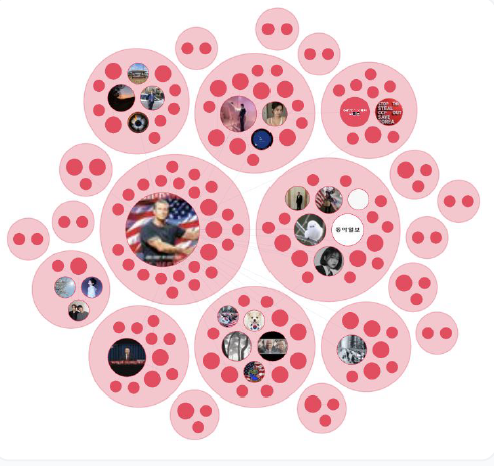
- The narrative was driven largely by authentic users, including elected officials, with inauthentic accounts highly reinforcing their posts
From Administrative Failure to Election Fraud
The timeline shows a clear progression. On June 3, discussion centered on the shortage itself and the NEC’s response. By June 5, election fraud allegations and calls for a new election were already reframing the story, amplified by criticism of the NEC. By mid-June, the conversation had become a sustained mobilization movement, with protest organization and institutional distrust as recurring themes. National Assembly hearings on July 7 reignited attention, and by July 9 the conversation reached its highest volume yet, with election fraud claims now extending well beyond the original incident.
Five Narratives, One Throughline
Cyabra identified five dominant narratives shaping the conversation:
- Election fraud claims — 20% of negative discourse, nearly 67 million views, framing the shortage as deliberate manipulation rather than an operational mistake
- Calls for a re-election — 15%, tied closely to a physical blockade of a vote-counting site in Songpa-gu
- Coverage of the administrative failure itself — 11%, the most fact-based narrative in the dataset
- Protest organization, sustaining public mobilization around the re-election demand
- Demands for an official investigation into the NEC’s conduct
Each of these narratives reinforced the same underlying distrust rather than introducing genuinely new claims.
A Lawmaker’s Outsized Reach
The single most influential voice in the conversation was not an inauthentic account. Joo Jin-woo, a member of South Korea’s National Assembly, published 43 posts questioning the NEC’s transparency and conduct, generating over 181,000 engagements and reaching a potential audience of more than 12 million, more than any other profile in the dataset. His posts, alleging procurement irregularities and pushing for a formal investigation, illustrate how much of this narrative’s reach came from real, identifiable public figures rather than manufactured accounts.
Three Platforms, Three Patterns
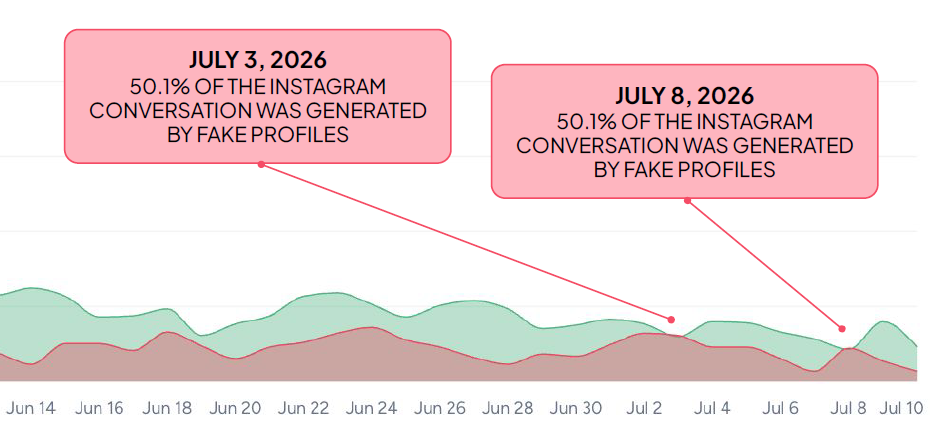
Inauthentic activity showed up differently on each platform. X carried the largest volume of inauthentic accounts, 840 of them, representing 22.6% of the platform’s conversation, and clustering to amplify each other’s content. Facebook’s 667 inauthentic accounts were a smaller share, 5.4%, and behaved more like pseudonymous individuals reinforcing existing narratives than a coordinated network. Instagram had the fewest inauthentic accounts, 560, but they represented the highest share of any platform’s activity, 26.5%, and generated the most engagement of the three, over 234,000, with clear signs of coordinated posting patterns and spikes that briefly made inauthentic accounts more than half of the day’s conversation.
What Election Authorities Can Learn
This case offers a concrete lesson for election bodies, government communications teams, and platforms alike: a real administrative error is enough of an opening. Once it exists, the story is no longer just about what happened, it’s about who gets to define what it means, and inauthentic amplification can decide that faster than any official statement.
A few things follow from that:
- Move faster than the narrative does. The window between an incident and its reinterpretation as fraud was days, not weeks. Early, specific, and repeated communication closes that window before it can be exploited.
- Watch for coordination before it peaks. Inauthentic clustering was visible in the data well before the conversation’s highest-volume days. Monitoring for these patterns early gives institutions time to respond before a narrative hardens.
- Don’t underestimate authentic amplifiers. The most influential account in this dataset belonged to a sitting lawmaker, not a bot network. Response strategies built only around detecting fake accounts will miss where much of the real reach comes from.
- Treat platform differences as real differences. X, Facebook, and Instagram each carried this narrative in a different way. A single monitoring approach across all three will miss what’s specific to each.
Read Cyabra’s full report on the South Korea election narrative analysis for the complete platform and narrative breakdown.
The timeline moved fast: on June 3, discussion centered on the shortage and the NEC’s response. By June 5, fraud allegations and calls for a new election were already reframing the story. By mid-June it had become a sustained mobilization movement, and National Assembly hearings on July 7 pushed the conversation to its highest volume yet.
A sitting lawmaker, not a bot network. Joo Jin-woo, a member of South Korea’s National Assembly, posted 43 times questioning the NEC’s conduct, generating over 181,000 engagements and reaching more than 12 million people, more than any other account in the dataset.
No, each platform showed a different pattern:
* X carried the largest volume, 840 inauthentic accounts (22.6% of the platform’s conversation), clustering to amplify each other
* Facebook’s 667 inauthentic accounts were a smaller share (5.4%) and behaved more like individuals reinforcing existing narratives
* Instagram had the fewest inauthentic accounts (560) but the highest share of activity (26.5%), briefly exceeding 50% of the day’s conversation on two dates
* Move faster than the narrative: the window between the incident and its reframing as fraud was days, not weeks
* Watch for coordination before it peaks, since clustering was visible well before the highest-volume days
* Don’t assume the most influential voice is a fake account; here it was an elected official
* Monitor each platform on its own terms rather than one approach for all three