


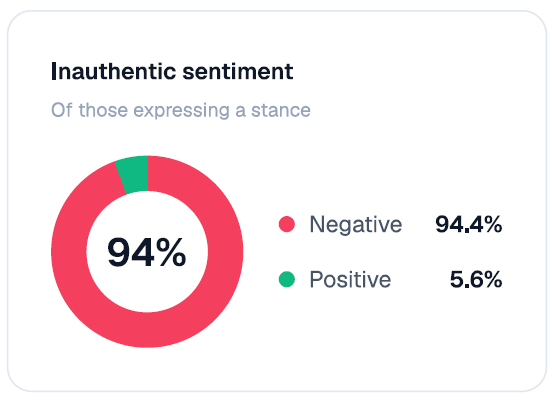
Converse launched its Chuck 70 X campaign with K-pop singer Karina on August 27th. Roughly three weeks later, backlash over imagery that viewers compared to a KKK hood and a lynching forced the company to pull the ad. Riding inside that backlash on X was a layer of inauthentic profiles, embedded in the highest-reach threads rather than posting on their own.
- Inauthentic accounts embedded inside existing high-reach threads rather than starting their own, replying and quoting to add volume.
- Inauthentic accounts' activity held under 10 posts a day for weeks, then jumped into the hundreds in the exact window Converse pulled the ad.
- Nearly 30% of the accounts reacting to the backlash were inauthentic, close to double Cyabra's benchmark for fashion and retail.
- Authentic content drove more than 27 times the engagement of inauthentic content - but inauthentic engagement still reached 17.4K.
Inauthentic Profiles Embedded Inside Threads They Didn’t Start
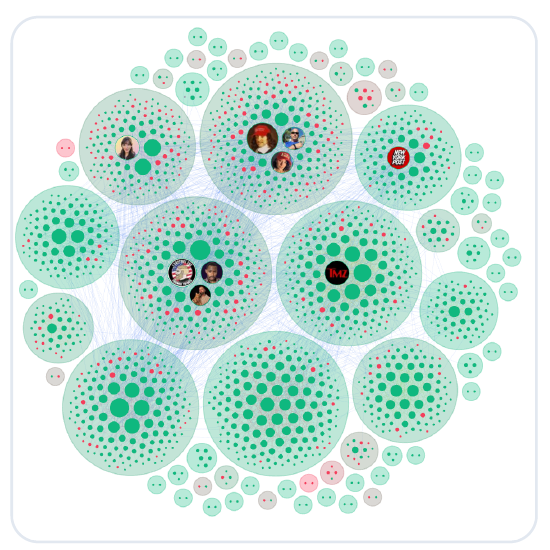
Cyabra’s Visual Link Analysis found that the inauthentic profiles in this discourse weren’t originating their own content. They were replying and quoting inside the posts already carrying the bulk of the real conversation, the highest-reach threads on X discussing the ad. That’s a specific tactic, not a byproduct. Building a new thread requires an audience to find it. Replying inside an existing one borrows an audience that already exists.
A Rate Well Above the Benchmark
The scale of that layer stands out on its own: Nearly 30% of the accounts reacting to the backlash were inauthentic, close to double what Cyabra typically sees in a fashion and retail controversy. A conversation this size, about imagery this sensitive, drew a coordinated inauthentic presence well outside the normal range for the vertical, and it arrived with the embedding tactic already described above rather than through separate, self-contained activity.
Timed to the Moment of Impact
The inauthentic layer’s posting pattern tracked a single event closely. Inauthentic activity held under 10 posts a day through most of August and September. It jumped into the hundreds only between September 18th and 20th, the exact window Converse pulled the ad. That’s not a slow build or a spread-out campaign. It’s a surge triggered by one specific news moment, consistent with accounts that amplify a story already breaking rather than accounts trying to start one early.
A Fraction of the Real Engagement
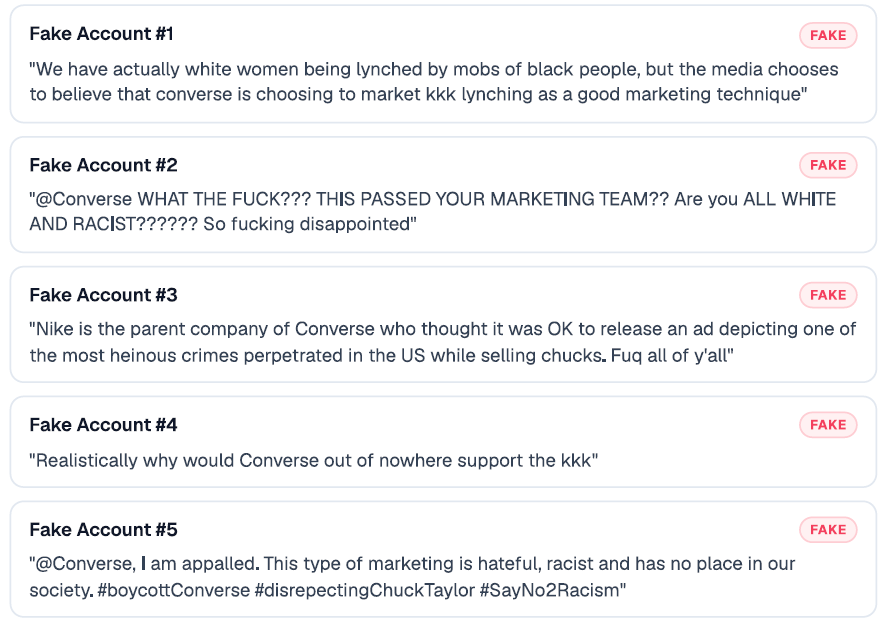
Even with a near-30% share of the accounts involved, inauthentic content drove only 17,400 engagements against 477,000 for authentic content. The embedding tactic and the timing spike produced volume, not reach.
That gap is reassuring here, but it isn’t a limit built into the tactic itself. Embedding inside high-reach threads works by borrowing whatever reach those threads already have. In this case, the real conversation was large enough that the inauthentic share stayed small by comparison. Applied inside a smaller or earlier-stage conversation, the same tactic could capture a much larger share of total engagement. The size of the gap here reflects the size of the real backlash, not a ceiling on what the tactic is capable of.
What This Means for Brand and Comms Teams
- Watch for accounts embedding inside high-reach threads through replies and quotes rather than starting new ones. That’s the tactic to flag first.
- Track posting-rate baselines so a jump from single digits to hundreds is visible immediately, not after the fact.
- Flag inauthentic surges that cluster tightly around one trigger event, like a takedown or an apology, rather than spreading evenly over time.
- Measure engagement alongside account counts. High account volume with low engagement share signals amplification, not an organic wave of its own.
Converse’s ad backlash gives a clear look at how a coordinated inauthentic layer operates around a real, live controversy: embedding inside it, timing its surge to the news, and adding volume that never matched the reach of the genuine anger driving the story.
Get in touch with Cyabra’s team to see how narrative intelligence applies to your brand.