


When Sony announced it would phase out physical PlayStation discs, the backlash that followed looked like a spontaneous explosion of gamer outrage. Cyabra's analysis tells a more structured story: a real grievance, a pre-organized movement, and a coordinated inauthentic layer that attached itself to both and pushed them further than they would have travelled on their own. The controversy reached 100.4 million views, with 70.4% of conversation on X displaying negative sentiment.
- The boycott narrative accounted for 57.3% of total conversation volume, making it by far the largest driver of the backlash
- 25% of the boycott narrative came from inauthentic accounts, concentrating in the reply sections of official PlayStation handles, where as much as 43% of comments on relevant posts were inauthentic
- Fake profiles' content gained 113,444 engagements and 1,031,105 potential views.
- The grievance predated Sony's announcement: organized advocacy groups had spent two years building infrastructure before Sony acted
A Boycott That Was Ready Before Sony Acted
Sony’s disc announcement didn’t create a movement. It activated one. The game preservation community had been organized, funded, and litigating for years before Sony acted, driven by prior incidents where publishers shut down games people had already paid for. By the time Sony made its announcement, advocacy groups had already cleared 1.3 million verified EU signatures, registered NGOs in the EU and US, and triggered a Westminster Hall parliamentary debate.
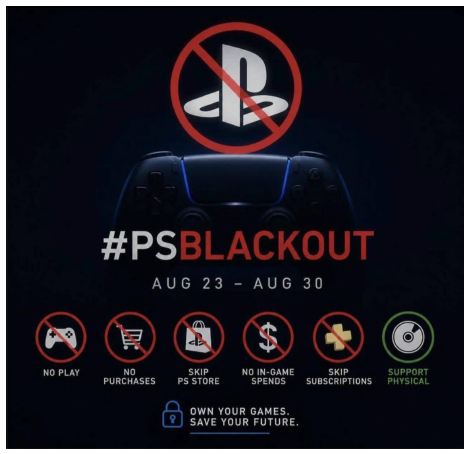
When the game preservation group DoesItPlay called for a one-week #PSBlackout on 26 July, the hashtag didn’t exist before that post. Within 133 seconds, four accounts had published the same call. International amplifiers followed through the evening. By midnight, French, Brazilian, and Spanish-language accounts had joined, carrying the call to tens of millions of views.
That timing matters. The boycott was announced four weeks before it took effect. For four weeks, the organizers were identifiable, the date was public, and conversation volume stayed flat. Sony’s only communication in that window was a terms-of-service email reminding customers that their games are licensed rather than sold, which confirmed its critics’ argument.
Where the Inauthentic Layer Concentrated
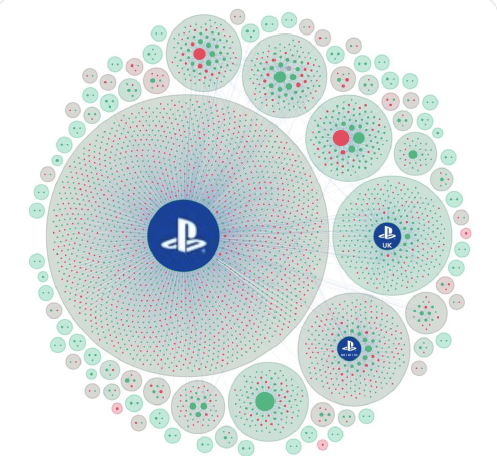
The boycott campaign’s visibility created an opening that inauthentic accounts moved into. Cyabra identified 842 inauthentic accounts in the conversation, making up roughly 25% of the boycott narrative. Their behavior was more targeted than their share suggests, and their content generated 113,444 engagements and 1,031,105 potential views. Rather than competing for reach in original posts, they concentrated in the reply sections of official PlayStation handles, where as much as 43% of comments on relevant posts were inauthentic.
The hashtag data makes the pattern visible. The campaign’s own hashtag, #PhysicalForever, ran at 8.2% inauthentic, close to the dataset average. Misspelled and reordered variants, #NoDiskNoBuy and #ForeverPhysical, ran at 86-89% inauthentic. These near-identical tags didn’t originate from the campaign. They were built alongside it, designed to look like it, and almost entirely automated.
Individually, inauthentic posts generated little to no engagement. Their impact came from volume: reply sections flooded, hashtags inflated, the apparent scale of the backlash expanded beyond what the organic conversation alone would have produced.
The Anger That Spread From the Ground Up
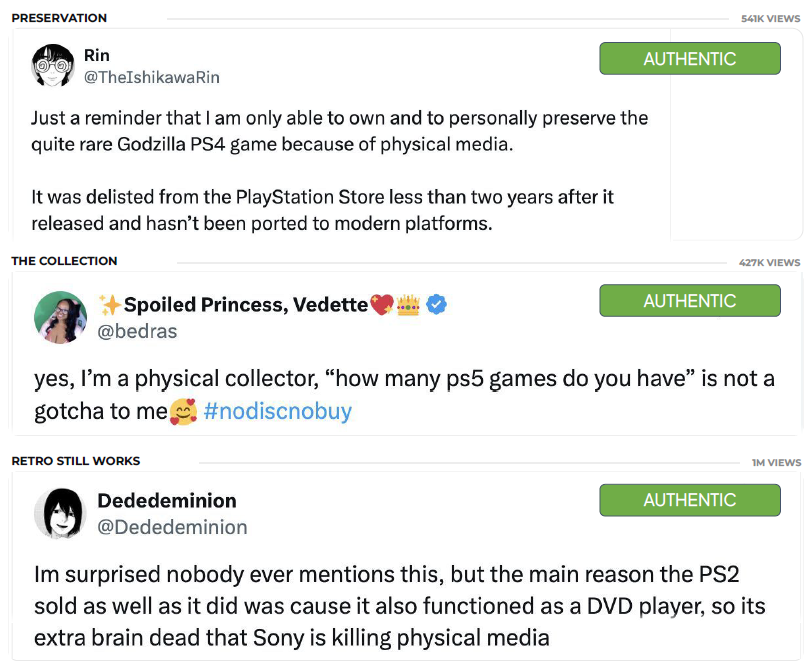
On the authentic side, 54.9% of engagement concentrated on just 50 posts from 42 accounts. The most influential post came from an account with 137 followers and generated over 104,000 engagements. 28% of the key posts came from accounts with fewer than 5,000 followers.
What travelled was testimony, not activism. Collectors describing what they stood to lose. Plain explanations of what Sony’s terms actually meant. Single sharp observations about physical media. The ownership and control grievance alone accounted for 54% of reasons cited within the #PhysicalForever narrative, far ahead of collecting, preservation, and offline play combined.
This matters for how Sony responds. There is no influencer list to brief and no network to disrupt. The damage spread from the ground up, driven by content that was specific, personal, and verifiable. The only available response is addressing the substance of the grievance.
The Risk Has Already Moved to the Next Generation
One of Cyabra’s most significant findings is that the conversation has already jumped forward. 4% of the conversation references the unannounced PS6. Hashtags including #NotBuyingPS6, #NoDiscNoPS6, and #BoycottPS6 are already in circulation. Players are pledging not to buy a console that hasn’t been announced yet.
This is what happens when a grievance attaches to a brand rather than a single product decision. Price grievances expire. Principle-based grievances don’t.
What Brand and Communications Teams Should Take From This
- Know your baseline before a crisis hits. The inauthentic layer in this conversation didn’t manufacture the anger. It found an existing one and inflated it. Knowing your normal inauthenticity rate means a spike is visible immediately instead of getting lost in the noise.
- Watch where inauthentic accounts concentrate. In this case, reply sections on official handles were the primary target, reaching 43% inauthenticity on specific posts. Volume across the whole conversation told a different story.
- Separate authentic sentiment from artificial amplification before deciding on a response. Treating coordinated inauthentic pressure as organic outrage leads to disproportionate escalation. Treating organic outrage as manufactured leads to no response at all. Both are costly.
- Watch for the weeks of silence. Between the boycott announcement and its start date, conversation stayed flat. That window was available for a substantive response. It closed without one.
Download Cyabra’s full report on the #PSBlackout boycott
If your brand is watching a similar conversation unfold, get in touch with Cyabra to see what’s happening beneath the surface.
Look at where the activity concentrates, not just how much of it there is. In the PlayStation case, 25% of the boycott narrative came from inauthentic accounts overall, but that share jumped to as much as 43% in the reply sections of official PlayStation handles specifically, meaning the coordinated layer wasn’t spread evenly, it was targeted at the brand’s own posts. The organic side told a different story: 54.9% of authentic engagement concentrated on just 50 posts from 42 accounts, many with small followings, sharing personal, specific testimony rather than campaign messaging.
* Compare inauthenticity rates across near-identical tags: the campaign’s own hashtag, #PhysicalForever, ran at 8.2% inauthentic, close to the dataset average
* Watch for misspelled or reordered variants: #NoDiskNoBuy and #ForeverPhysical ran at 86–89% inauthentic despite looking like organic offshoots
* Check engagement per post, not just volume: individually, the inauthentic posts generated little to no engagement, their impact came from flooding reply sections and inflating hashtag counts at scale
The silence itself became part of the story. Conversation volume stayed flat for the full four weeks between the boycott announcement and its start date, while the organizers and the date were both public. Sony’s only communication in that window, a terms-of-service email reminding customers their games are licensed rather than sold, ended up confirming the critics’ argument instead of countering it. By the time the #PSBlackout hashtag actually launched, four accounts had already echoed it within 133 seconds, and international amplifiers carried it to tens of millions of views by midnight.
* Know your baseline inauthenticity rate before a crisis hits, so a spike is visible immediately instead of getting lost in normal conversation noise
* Watch where inauthentic accounts concentrate rather than just their overall share; reply sections on official handles reached 43% inauthentic here while the wider conversation sat at 25%
* Separate authentic sentiment from artificial amplification before responding: treating coordinated pressure as organic invites overreaction, treating organic anger as manufactured invites no response at all
* Don’t let a quiet window run out the clock; the flat four weeks before this boycott began were the best chance for a substantive response, and it closed without one