

On May 14, 2026, Spotify launched a new logo to mark its 20th anniversary. Within hours, the internet had a verdict: the redesign was ugly, the designers should be fired, and the "disco ball" era was over. What followed was one of the largest brand backlashes of the year, playing out across X, Facebook, Instagram, and TikTok in real time. Here's what Cyabra uncovered:
- Spotify's 20th anniversary logo change triggered one of the biggest brand backlashes of the year
- 77% of the negative discourse came from real users; a single mocking narrative generated approximately 500K interactions in a single day
- 23% of profiles were inauthentic, amplifying existing criticism through hashtags including #Spotify20 and #spotifylogo
- This was a real brand crisis, made measurably worse by inauthentic actors who moved in to amplify it
Spotify is one of the most recognized brands in the world, with over 600 million users across 180 markets. When a brand that size changes something as visible as its logo, the reaction is never small. Cyabra analyzed the online discourse surrounding the logo change throughout May 2026 to understand what was driving it.
The Spotify Backlash Was Real
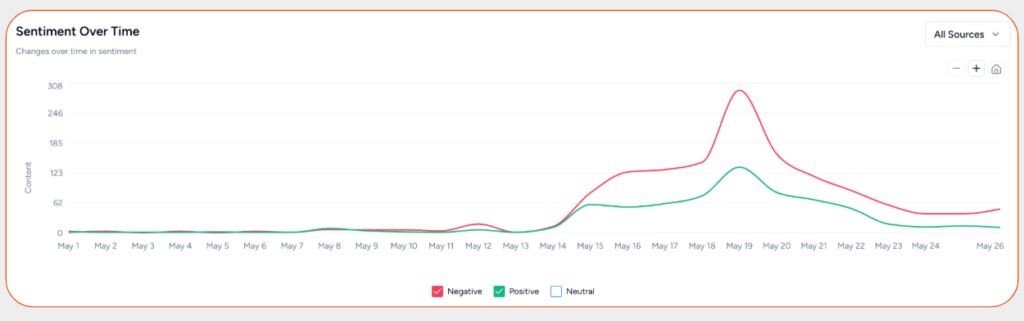
The numbers are unambiguous. 77% of the profiles driving the negative conversation were authentic users with genuine dissatisfaction. A single narrative mocking the redesign accounted for 40% of the entire online conversation around the logo change. On May 17, engagement spiked to approximately 500K interactions in a single day.
The content reflected real frustration. Users called the new logo ugly and terrible, threatened to cancel their subscriptions, and demanded that whoever designed it be fired. Memes spread fast. The backlash crossed platforms and communities with the kind of organic momentum that no coordinated effort manufactures on its own.
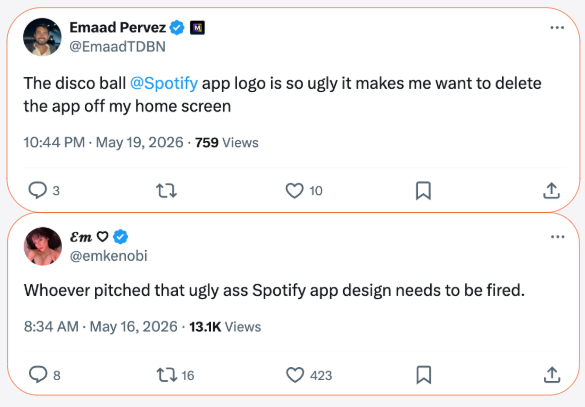
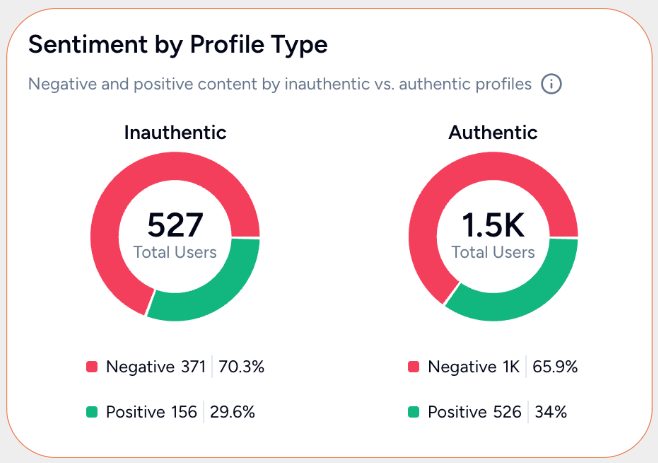
The sentiment data reinforces this. 65.9% of content from authentic profiles was negative. This was not a fringe reaction or a vocal minority. A clear majority of real users who engaged with the topic did so critically, and they said so loudly and at scale.
This matters because it is easy, in hindsight, to attribute a social media crisis entirely to bad actors. The evidence here does not support that: Spotify’s logo change failed to resonate with a significant portion of its user base, and those users said so loudly and clearly.
But The Critics Were Not Alone
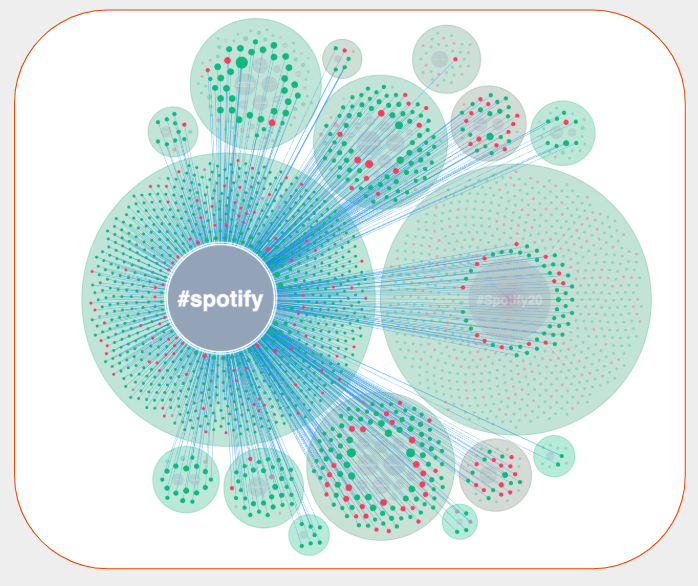
23% of the profiles participating in the discourse were inauthentic. These accounts were not operating in isolation. They were active within the same communities as real users, publishing negative content targeting the redesign and concentrating their activity around key hashtags including #Spotify20 and #SpotifyLogo to increase visibility and push the narrative further. Their content generated 13.6M potential views.
Notably, inauthentic activity did not spike immediately at launch. It peaked on May 19, five days after the logo change went live. That timing is significant. It suggests these accounts were not first-movers. They followed the organic wave, identified a high-volume negative conversation already in motion, and moved in to amplify it.
The sentiment picture among inauthentic profiles was even more skewed than among authentic ones: 70.3% of their content was negative, compared to 65.9% among real users. Inauthentic accounts were not reflecting the full range of opinion. They were pushing a specific angle, concentrating negative sentiment and extending its reach into communities it might not have otherwise penetrated.
What This Means for Brands
The Spotify case is not a story about a manufactured crisis. It is a story about a real one that was made measurably worse.
Genuine public sentiment, when it reaches critical mass, becomes a target. Inauthentic actors scan for exactly these moments: high-volume, high-emotion conversations where additional negative content blends in naturally with organic noise. A brand reeling from a product decision that missed the mark is more vulnerable, not less, to this kind of amplification.
What this case makes evident: brands that can distinguish organic sentiment from inauthentic amplification are in a fundamentally different position when it comes to responding. Knowing that 77% of the backlash was real changes the nature of the response required. Knowing that 23% was not changes the mitigation strategy entirely.
Proactively monitoring for inauthentic activity is not a replacement for listening to genuine user feedback. It is what makes that feedback legible.
Download the full report by Cyabra
Real.
77% of the profiles driving the negative conversation were authentic users with genuine dissatisfaction, and 65.9% of their content was negative. A single mocking narrative alone accounted for 40% of the entire conversation, and engagement spiked to about 500K interactions in one day on May 17.
23% of the profiles in the conversation were inauthentic. They didn’t invent the criticism, they joined it, clustering around hashtags like #Spotify20 and #SpotifyLogo to push it further. Their content pulled in 13.6M potential views, and their sentiment ran even more negative than real users’, at 70.3% versus 65.9%.
No, five days later.
Inauthentic activity peaked on May 19, not at the May 14 launch, which suggests these accounts weren’t driving the story from the start. They waited, spotted a high-volume negative conversation already underway, and moved in to amplify it.
That a real crisis and inauthentic amplification aren’t mutually exclusive, and treating them the same way is a mistake. Knowing that 77% of the backlash was genuine changes what kind of response is needed. Knowing that 23% wasn’t changes the mitigation strategy entirely. Monitoring for fake activity isn’t a substitute for listening to real feedback, it’s what makes that feedback readable in the first place.